

Nobody's nervous about the branzino.
Your drink order projects some intent.

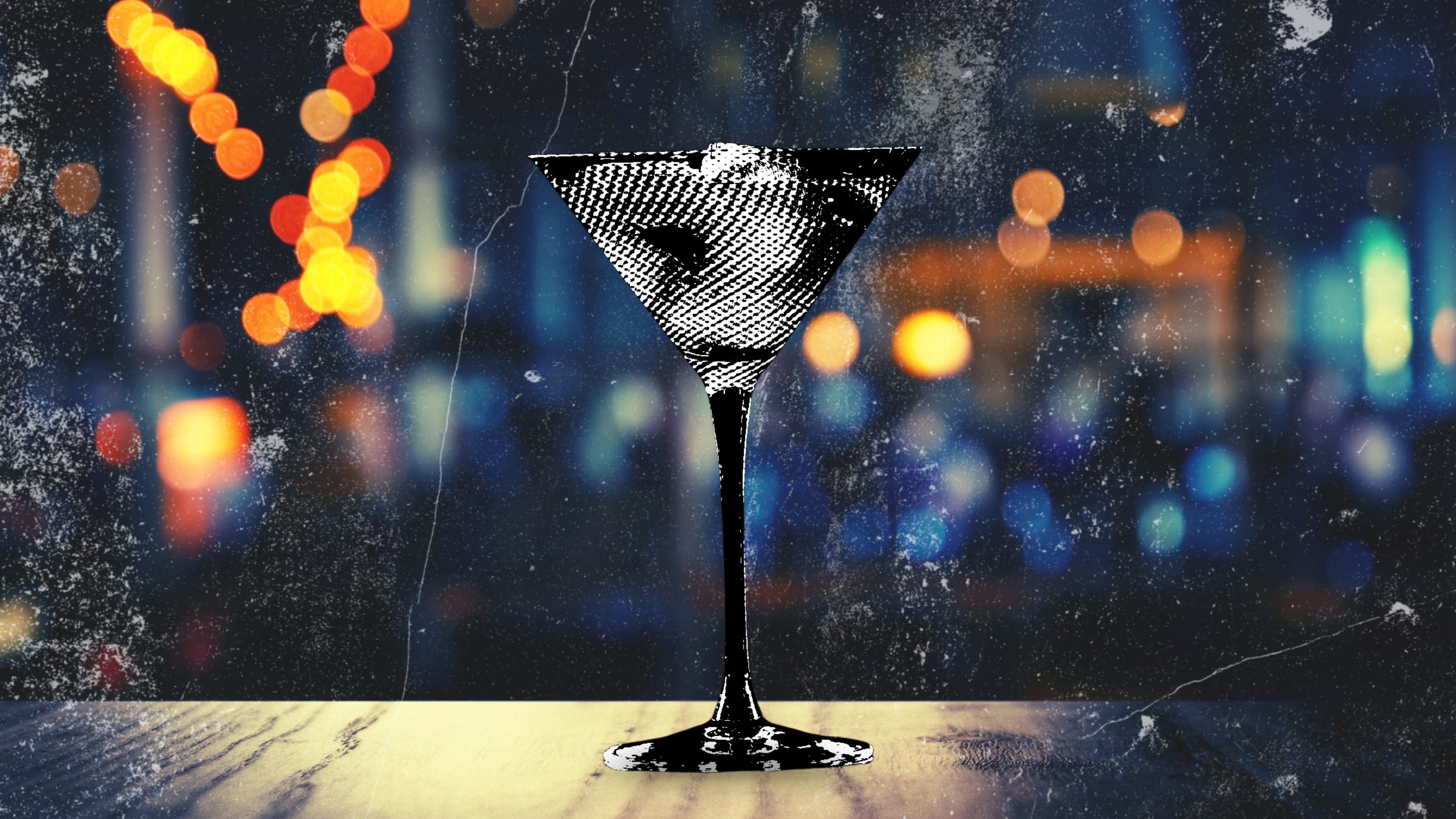
I was meeting friends for dinner the other night, and one of them had arrived early and was already talking to the waiter when I sat down. She didn’t ask what I wanted. She said, “I know you’re a martini person,” and then, to the waiter, that they should bring the brine on the side so we could mix our own. It took four seconds. What stayed with me was how little she had to think about it. Somewhere along the way she paid attention and remembered my preferences. That is indeed my drink of choice when I am with them.
This past year I have been at more dinners than I can count for both business and personal reasons and some blurry ones in between. And I have started noticing something. Nobody is nervous about their food order. People say the branzino, the pasta, the steak out loud without any hesitation. But the drink order carries a small charge every time, a half-second of calculation before anyone commits.
We treat our drink order as a statement, as part of personality, as part of what we want to project and show.
The reason is that we pretend the drink reveals taste, when mostly it reveals intent.
We pretend the drink reveals taste, when mostly it reveals intent.
I believe that martini is a statement that you know exactly what you want and how long you intend to take over it. The Long Island iced tea is a decision to dissolve. Vermouth and soda announces that you are settling in for conversation and have no intention of being carried out. Nobody has ever ordered a piña colada at a board dinner by accident.
The food is what you need. The drink is what you are telling the table you intend to do with the evening, which is why it makes us nervous and the branzino never does.
And the whole menu is a spectrum of declared intentions if you are paying attention. The Negroni says you have strong opinions and refined taste and would like you to know you are not easy to impress. The Old Fashioned says you like structure and control, and that you are either very sorted or very good at seeming like it. The Long Island iced tea says you are not here for small talk, you want the night to move. The gin and tonic says you are simple on the surface and quietly clocking everything without saying much. The glass of wine says you are taking your time to decide whether any of this is worth it. The soda and lime says you have decided, tonight, to be the person who stays clear, and is comfortable letting the table notice. And “surprise me,” the order that pretends to be the most easygoing, is usually the most loaded of all, because it is placed by someone who hasn’t yet decided who they want to be this evening and is hoping the bartender will choose for them. (These are my observations, share yours in the comments)
Pull back far enough and the drink declares the era’s plan, too. The three-martini lunch belonged to a postwar decade that believed in the heroic individual and his liver. The Cosmopolitan rode Sex and the City through the early 2000s and became the unofficial drink of a certain idea of female freedom, pink and stemmed and made to be photographed. The Appletini was Y2K liquid candy, ordered in the first camera-phone years less for how it tasted than for how it looked in the shot. The espresso martini overtook the Manhattan around 2022, a tired generation ordering its caffeine and its alcohol in one efficient glass.
Lately, it has been the spritz, low and bright and engineered to photograph, the drink of a moment that wants to perform ease above all else, optionality dressed as leisure, a plan to look like you have no particular plan.
Each generation thinks it simply found the good drink. It found a plan for the kind of evening, and the kind of self, it wanted to be having.
Because intent is the part that points forward, and this is where the drink stops being a confession and becomes a forecast. The teenager ordering the most adult thing on the menu isn’t lying about who they are. They are rehearsing who they intend to become, using the glass as a low-stakes stage. The person who switches from sugary cocktails to bitter amari hasn’t suddenly developed a refined palate. Bitterness is an acquired posture, and acquiring it is the point, a way of ordering toward a version of yourself that finds sweetness embarrassing. Preference runs slightly ahead of identity. You reach for the drink that belongs to the person you’re moving toward, which is why an order can feel aspirational and honest at once. It tells the truth about your direction, not your coordinates.
None of which makes the wanting fake. You do order what you like. The mistake is treating liking as a settled fact rather than a moving one. We talk about taste as if it were a possession, a thing you have and then express, when it behaves far more like a direction you are traveling.
So the nervousness around the drink order is not vanity and it is not really about taste. It is the knowledge that you are about to say, out loud and in front of people, what you intend to do with the next few hours and the next version of yourself. The food is what you need tonight. The drink is where you’re headed. No wonder we hesitate. We are not choosing a beverage. We are announcing a direction, and hoping the table reads it the way we meant it.
Sources
The espresso martini’s rise into the top 10 most-ordered US cocktails in 2022, displacing the Manhattan: CGA by NielsenIQ Cocktail Sales Tracker, reported in CNN Business, “Why 2022 is the year of the espresso martini” (December 3, 2022). https://www.cnn.com/2022/12/03/business/espresso-martini-popularity-rise/index.html
The Manhattan dropping four places and out of the top 10 versus 2021: CGA by NielsenIQ, “Espresso Martini now one of the Top 10 cocktails in the US On Premise” (January 2023). https://cgastrategy.com/espresso-martini-now-one-of-the-top-10-cocktails-in-the-us-on-premise/
The Spritz overtaking the espresso martini to become the seventh most popular US cocktail by Q3 2023: CGA by NielsenIQ, reported in The Spirits Business, “Spritzes surpass Espresso Martinis in US” (January 19, 2024). https://www.thespiritsbusiness.com/2024/01/spritzes-surpass-espresso-martinis-in-us/
Background reading
on food as a uniquely intimate marker of identity, the thing we metabolize and become: Claude Fischler, “Food, Self and Identity,” Social Science Information 27, no. 2 (1988).
About Kima
Kima Sargsyan is a strategist and narrative consultant writing Perceptio. She works with founders and execs on how their company is seen and how to shape it.


Interesting take but on the flip side if a person doesn’t drink is he always judged as a health freak or is his individual dislike of alcohol is considered.Since 2020 teetotallers are no longer boring people they are intelligent people who love themselves. The question now becomes does the social output of a drink leads us to outweigh a persons personality?