

Why we can’t manufacture third places.
Community is an unownable space that belongs to everyone and no one.

Starbucks has recently announced the closing of some stores in USA and Canada. In recent years, as Starbucks has increasingly shifted its business model toward drive-thrus and mobile orders, I found myself thinking about its once-vaunted “third place” strategy. For years, the company explicitly marketed itself as creating spaces “between home and work” - a cornerstone of their brand identity. Yet their operational decisions increasingly contradicted this positioning, revealing the fundamental tension between profitability and genuine community spaces. This is just one example.
Teams across retail have been attempting to position their spaces as “the new generation of third places.” They frame it as a cultural shift: “humans seeking more community building in physical spaces, not digital.” It sounds compelling. But in the race to brand belonging, the meaning gets hollowed out until nothing remains but aesthetics.
Third places aren’t what marketers think they are
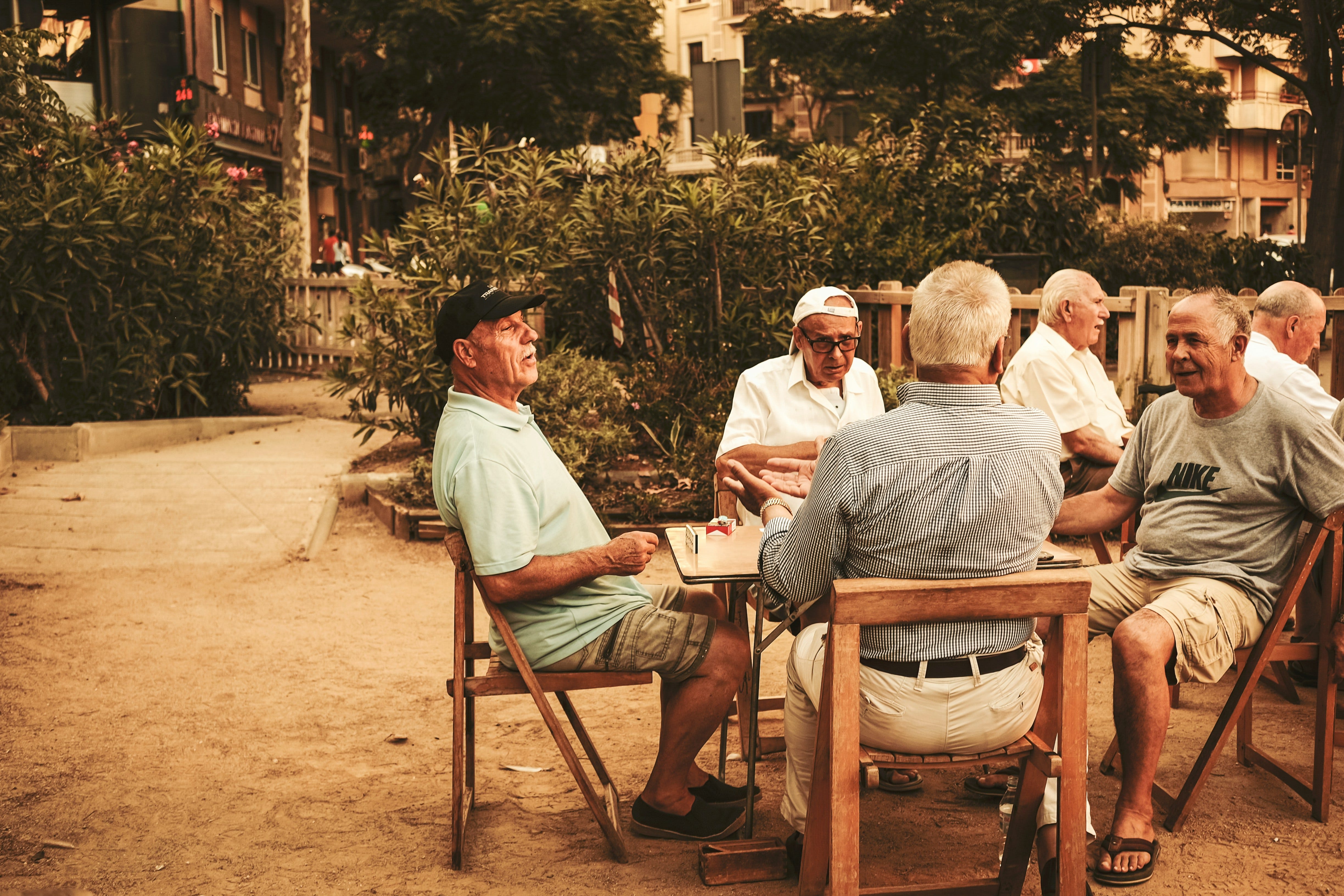
A “third place” is a social environment separate from home (the first place) and work/school (the second place). This concept was developed by sociologist Ray Oldenburg in his 1989 book “The Great Good Place”, where he argued that these spaces are crucial for community, social interaction, and civic engagement. According to Oldenburg, third places can include cafes, libraries, parks, churches, hair salons and other spaces where people choose to linger without obligation. These spaces, where conversation takes center stage and gatherings are unplanned, serve as equalizers, transcending distinctions of status, class, and race. Oldenburg argues that the decline of third places has contributed to the erosion of community, civility, and increased isolation and division within American society.
That’s what North American marketers miss.
For a place to be a third place, there are 3 essential qualities to meet:
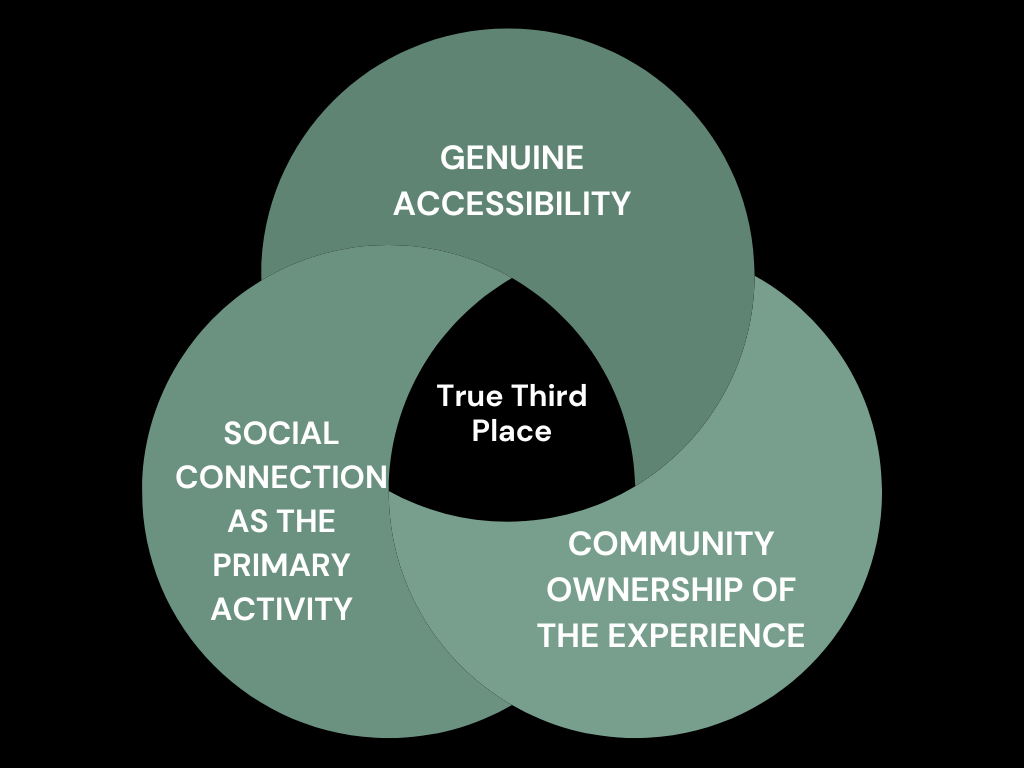
Genuine accessibility without transaction - A proper third place welcomes everyone without requiring purchase or membership. People can linger without spending money, and the space doesn’t demand consumption as the price of admission. The homeless person can sit as long as the CEO, and neither is asked what they’re buying.
Community ownership of the experience: The regular visitors, not the property owner, determine the unwritten rules, rhythms, and culture of the space. Traditions emerge organically from those who gather there, not from corporate planning sessions. When regulars shape the space’s identity, newcomers can feel its authenticity immediately.
Social connection as the primary activity: While coffee shops serve coffee and libraries house books, in proper third places, these functions are secondary to human connection. People come primarily for the community, not the product or service. The measure of success is how many conversations happened today, not how many transactions.
These elements are fundamentally at odds with traditional large-scale business metrics. They can’t be manufactured through interior design or forced through branded “community events.” They emerge through consistent availability, genuine openness, and most importantly, time.
The new flagship store downtown isn’t a third place just because it has a coffee bar and a friendly barista. It’s still a store, a beautiful one perhaps, but not a communal anchor. There’s no shared memory, no social function, no reason to stay beyond the purchase or time needed to consume your purchase.
You can’t buy community (but we pretend you can)
In my observation, what’s fascinating about Starbucks isn’t that it fails as a third place—it’s that we collectively pretended it succeeded for so long.
The Starbucks third place existed as a kind of cultural fiction. We recognize the scripted interactions (”Can I get a name for that order?”) as manufactured intimacy, yet we still feel a flutter of recognition when our name is called. We know the furniture is designed for turnover, not conversation, yet we still seek momentary shelter there. We understand that community can’t be franchised, yet we accept its simulation.
For a few dollars, we purchase a temporary membership in a space that demands nothing from us beyond the transaction. No maintenance of relationships, no negotiation of shared values, no responsibility to return tomorrow. The very frictionlessness that makes it appealing is precisely what makes it hollow.
This isn’t a criticism unique to Starbucks as it reflects a broader pattern in how we’ve commercialized social spaces.
The loneliness economy and why it matters
There’s compelling evidence that traditional community spaces have declined in recent decades. Robert Putnam documented this trend extensively in “Bowling Alone” (2000), showing how Americans participate less in community organizations, from bowling leagues to civic groups. According to Gallup, church membership dropped below 50% for the first time in 2020.
I wonder how this connects to our increasing reliance on commercial spaces as substitutes for community. We know Americans report higher rates of loneliness—a 2021 Harvard study found 36% of respondents feeling “serious loneliness”—but the causal relationship between declining third places and increasing isolation is complex and multifaceted.
As genuine third places have declined, their commercial simulations have proliferated. WeWork sold the aesthetics of community to freelancers. Instagram-friendly cafés design spaces for the appearance of togetherness. We’ve accepted these pale imitations because the real thing requires something increasingly scarce: time without productivity attached to it.
Who got it right by not trying
The commercial spaces that function most like third places today succeeded by accident rather than strategy. These observations aren’t based on formal case studies, but on patterns I’ve noticed across different businesses:
Independent bookstores often foster community not by explicitly marketing themselves as gathering spaces, but by simply allowing people to browse without pressure to buy. When book lovers can gather without being hurried along, community emerges organically.
Long-established neighbourhood cafés typically don’t brand themselves around community—they simply provide consistent service and recognize regulars over time. Many have maintained their character because the owners prioritized neighbourhood connection over rapid expansion.
Game stores and cafés work as social spaces because they center around a shared activity that naturally fosters interaction. The games aren’t a marketing gimmick—they’re the genuine reason people come together.
What these spaces share is that none of them began with a brand strategy to “create community.” They created conditions where the community might emerge naturally, then got out of the way.
The unexpected third places
While physical third places struggle under commercial pressures, digital spaces have emerged as alternatives particularly those organized around shared interests rather than platforms.
Discord servers for specific fandoms, subreddits focused on niche hobbies, and small Twitch streaming communities often display characteristics of traditional third places: they’re accessible without purchase, the community sets its own norms, and social connection is the primary activity.
I’ve observed that these digital communities succeed where physical corporate spaces fail because they aren’t trying to monetize every interaction. Their primary currency isn’t dollars but attention and participation. They also allow for something physical spaces increasingly don’t: presence without pressure to consume or leave.
This isn’t to suggest online spaces are perfect substitutes for physical gathering places. They do come with their own limitations and challenges. But they demonstrate how third-place characteristics can emerge when profit isn’t the primary motive.
Maybe there’s a way, but your CEO won’t like it.
If brands want to play in the space of belonging, they have to earn it through genuine contribution, through worldbuilding, fandom, storytelling, consistency, not just aesthetics. Then, the space may become a third place through use over time. It would be slow, very slow, for a quarterly report.
Otherwise, it’s just a coffee shop inside a store, and that’s okay. It doesn’t need to pretend to be more.
So how could brands truly create a third place, if ever? The path, if it exists at all, is long, humble, and nothing like what shows up in pitch decks.
First, they’d need to surrender control. A genuine third place belongs to its community, not its founder. This means allowing people to shape the space’s purpose, rules, and evolution, even if it diverges from brand vision. Nowadays tech stores may have communal tables, but they still dictate every interaction. That’s not community, that’s choreography.
Second, they’d need to embrace genuine generosity without immediate ROI. Imagine a retail space with a truly public component, a bookshop that dedicates half its square footage to a community library where nothing is for sale, or a café that hosts neighbourhood dinners where locals cook together. No brand metrics, no content capture, no “engagement” tracking.
Third, they’d need patience measured in years, not quarters. Communities form through shared experiences accumulated over time, celebrations, conflicts resolved, and traditions established. No brand strategy accelerates this human process. Your CMO would be retired before you’d see results.
Most importantly, they’d need to embrace the messy authenticity of real community life. Third places aren’t polished or Instagram-perfect. They have regulars with strong opinions, inside jokes, unwritten rules, and the occasional disagreement. They’re not always photogenic, but they’re always meaningful.
The most honest approach
In truth, the most honest approach is for brands to support existing third places rather than trying to create their own. Sponsor the local library without plastering it with logos. Fund community gardens without claiming them. Provide resources to neighbourhood associations without extracting content.
Because ultimately, a proper third place cannot be owned, and that’s precisely what makes it valuable. No slide deck will ever capture that.
As someone who works in marketing, I find myself in the uncomfortable position of questioning my own industry: some things shouldn’t be branded. Some human needs exist outside the marketplace. When we try to package and sell belonging, we strip them of the very qualities that make them valuable.
As people, we might ask ourselves: what genuine third places still exist in our communities? Are we supporting them with our presence, not just our purchases? Are we willing to invest the unproductive time required to belong somewhere? Have we grown too comfortable with the frictionless simulation of a community that requires nothing of us?
The decline of third places is a societal problem. And perhaps the most radical act is to create spaces for belonging that have nothing to do with consumption at all.
I would know because I grew up in third places. And I’ve watched them disappear one by one, replaced by their branded simulations. What I’ve learned is that the moment you try to own a community, you destroy exactly what makes it valuable.
About Kima
Kima Sargsyan is a strategist and narrative consultant writing Perceptio. She works with founders and execs on how their company is seen and how to shape it.
Want to keep talking?
Glad I found this. Highlighted some tensions and opportunities I see for third spaces structured around lifelong learning affinities
This was so well written and communicated.
I wish we could have more spaces that were simply treated as "public goods," where the monetization of them is not a consideration or a requirement.
Easier said than done, but community and public goods should exist in a way where our collective engagement with them, means that it's benefit for everybody.