

The foodie is dead. The behaviour isn't.
An identity only works while someone's still on the other side of it.

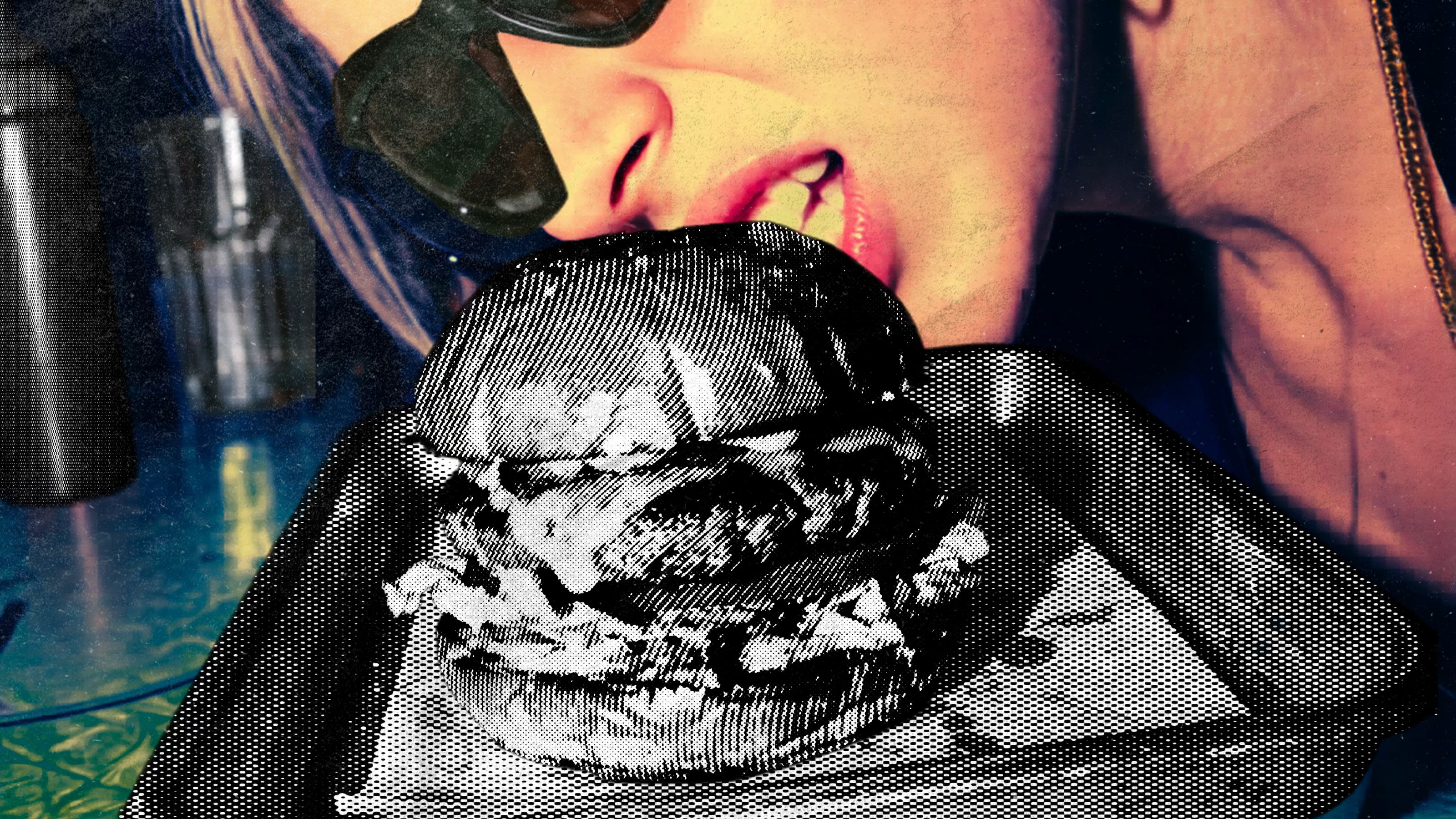
Right now, somewhere near you, a few hundred people are standing in a line that wraps around a block for a slice of pizza from a place that just opened. The slice is good, but no slice is ninety-minutes-of-your-Saturday good. They are there because being there means something. The line is the product. The pizza is the receipt.
This is identity construction, happening in real time. We tend to think we adopt identities to express who we already are. The opposite is true too. We adopt them to sort ourselves from the people who aren’t in the line, and the sorting is the entire point. An identity is only ever a wall, and a wall only works while someone is on the other side of it.
If you want to watch that mechanism run its full course, from birth to death to strange afterlife, you could pick almost any of today’s labels. But most of them are too young to have finished the cycle. So it’s worth looking at one that already did, slowly enough that you can see every stage. The foodie.
In 1980, a New York restaurant critic named Gael Greene reached for a word that didn’t quite exist and wrote foodie. It was nearly a throwaway, faintly silly, the way you’d say groupie. Four years later two British writers turned it into The Official Foodie Handbook, a field guide written as comedy, one of them crowning himself King Foodie. The satire and its target were the same person, which is the first thing worth noticing about how identities form: they almost always begin as a half-joke, a label loose enough that you can wear it without fully committing, deniable enough to try on.
The word worked because it threaded a needle the older words couldn’t. There was already a vocabulary for caring about food, and it was a vocabulary of intimidation. The gastronome treated eating as an intellectual discipline. The gourmet was trained and demanded the best. The gourmand wanted more of everything without apology. Each sorted you into a small, forbidding room with a high bar to entry. Foodie opened a room anyone could walk into. It asked for a sensibility, not a credential. And here’s the second mechanism: a new identity spreads fastest when it lowers the cost of belonging. It has to be claimable. The barrier has to be low enough to cross but high enough to still mean something on the other side. The foodie got that ratio exactly right, and it arrived precisely when a rising middle class wanted to say I care about this without having to prove it.
For thirty years the wall held. To be a foodie was to not be the person who didn’t know about the new place. That gap, that small exclusion, was the whole engine.
Then everyone crossed the wall, and here is where the third mechanism shows itself, the one nobody building an identity wants to hear: success is what kills it. The Food Network made chefs famous. Dinner stopped being the thing before the movie and became the whole evening. The phones came out and we started staging plates, the halved egg for the overhead, the pasta lifted for the pull. By 2022 #foodie passed two hundred million posts. That looked like the movement’s peak, and it was its death as well. A wall everyone has crossed is not a wall. The word that once told people something now told them nothing, and Greene herself called the term toxic by 2012. The people who’d used it to signal they knew things went quiet, the way you retire a band shirt the week the band sells out stadiums. They hadn’t changed. The signal had collapsed.
But the death of the word is not the death of the behaviour. An identity, once released into the culture, does not disappear when its name dies. It splinters. The impulse goes looking for smaller, fresher rooms to sort itself into, and it finds them everywhere.
Watch where the foodie went. When the world shut in 2020, a large part of it started feeding flour to a jar and naming the jar. Sourdough was never about bread, it was more a comforting, stress-relieving project when commercial yeast ran out. It evolved into a lasting lifestyle trend driven by the “slow food” movement, the appeal of clean ingredients, and potential gut-health benefits.
Then look the other way, at the person eating alone on purpose with OpenTable reporting a 19% year-over-year increase. Not the sad desk lunch but the reservation for one, the bar seat booked in advance, the tasting menu taken solo and unhurried. Solo dining reservations grew faster than any other party size last year, and restaurants noticed fast. This could be viewed also as part of the “Me Time” craze. According to OpenTable, the vast majority of solo diners deliberately book tables to unplug, read, people-watch, or enjoy the peace and quiet.
The foodie went out to be seen having taste; the solo diner goes out to be seen needing no one. The wall here isn’t the line you stand in. It’s the comfort being alone in a restaurant.
And then the supper club, where a home cook charges admission to a dinner party. This trend is seeing a massive modern renaissance, driven by a cultural shift away from nightlife and towards intimate, curated, and community-focused dining. It offers a hybrid of a dinner party and a restaurant fusing delicious home-cooking, unique venues, and new friendships. The foodie wanted to be seen having taste; the supper-club host wants to be seen owning the room, holding the one wall nobody can storm, because she decides who gets a seat.
And the pizza line is just the latest fragment: the foodie impulse, stripped down to its purest form, the public performance of being somewhere that matters.
Now here is the part that should make you look differently at every label currently going around. The foodie had a thirty-year runway. It got those decades because it was born slow, in print, before the machine that now manufactures and disposes of identities at speed. The labels minting today do not get thirty years. Cottagecore, clean girl, mob wife, the quiet luxury person, underconsumption core — these arrive fully formed, peak in a season, and hollow out in two or three years, because the wall goes up and gets stormed at the speed of a feed.
The cycle that took the foodie three decades now runs in roughly three years, and the generation raised inside that acceleration has internalized the whole arc. They adopt the label, perform it, and drop it the instant the line gets too long, without ever announcing the exit. They have learned, correctly, that the name is disposable and only the behaviour persists.
So the question worth sitting with isn’t whether the foodie is dead. It’s what your own current label is doing. It’s either still a wall, still leaving someone out, still carrying a charge. Or it has gone the way of the foodie while you weren’t watching, and you’re holding a badge for a crowd that stopped checking. The people at the front of that pizza line will not call themselves anything. They’ve already learned the lesson the foodie taught the hard way: the tell was never the food. It was that the doing got loud enough to make the word redundant, and the only move left is to keep finding a quieter room.
About Kima
Kima Sargsyan is a strategist and narrative consultant writing Perceptio. She works with founders and execs on how their company is seen and how to shape it.
So I’m definitely no longer cool. Had no idea the word was officially dead. Great read!