

Rituals we haven’t invented yet
THE FUTURES / VOL. 3


Right now, as I write this (my 30th post on Substack), Hermanos Gutiérrez’s “Rain God” is playing in my ears. This has become my ritual—calming music, just instrumental flow. I can’t write into rhythm. I need the kind of sound that holds space without demanding much attention.
It’s a small thing. But it’s also everything. The music marks this as writing time, not scrolling time. It creates a boundary. Without it, the words don’t come the same way.
I think about rituals like this—how many we’re losing without noticing. How many transitions we shove under the rug and keep moving. The friendship that faded. The career chapter that ended. The version of ourselves we’re not anymore. We go about our day, but the event stays unprocessed in us, accumulating like dust we never wipe away.
We’ve learned to sell belonging faster than we’ve learned to build the conditions for it.
In January 2026, a fashion brand tried something different. Beit Kotn opened above Kotn’s London store—a creative residence for artists and creatives from across the Middle East and North Africa working on projects in London. It’s invitation-only, not commercial. You request a stay through their portal, describe what you’re working on, and if space is available, you can stay for free. No transaction.
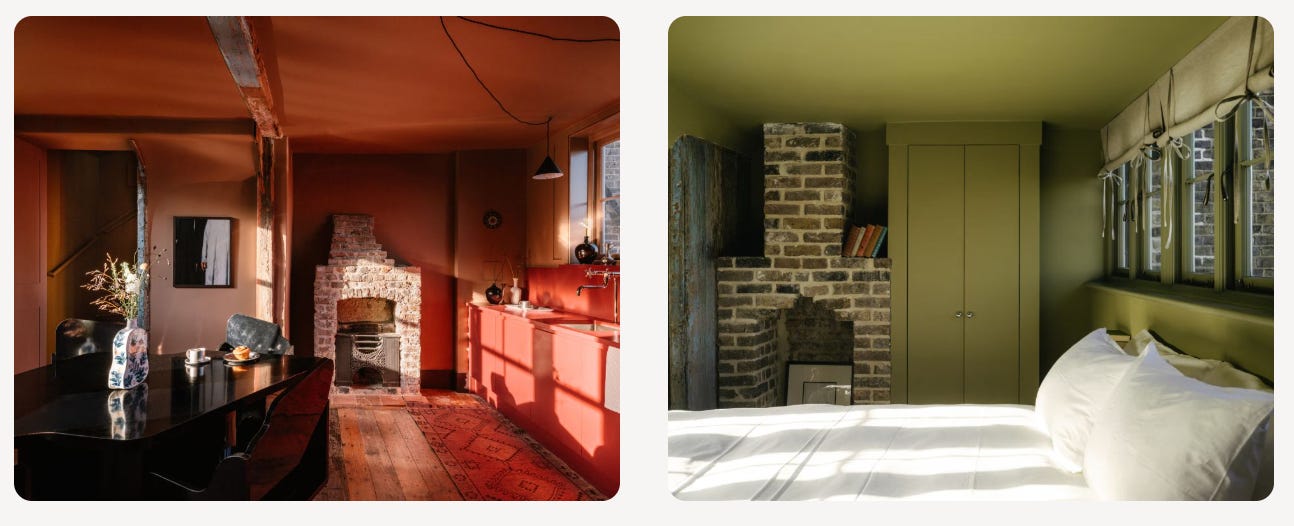
It’s too early to say if it works. But the attempt matters. Kotn is building toward infrastructure for rituals we don’t have words for yet: how creatives belong somewhere temporarily while making work, how they build community without permanence. Whether it becomes a genuine third place depends on whether the community claims it, not whether the brand markets it.
This matters because we’re losing both ritual and third places simultaneously. Ritual has been aestheticized into content. Third places have been optimized into stores with communal tables. What made them work—repetition, stability, lack of transaction—has been stripped away.
But people are building new rituals anyway. For transitions businesses don’t recognize. In spaces that don’t photograph well. This essay maps that territory across three time horizons: what’s shifting now, what could crystallize next, and what worldviews might ultimately emerge.
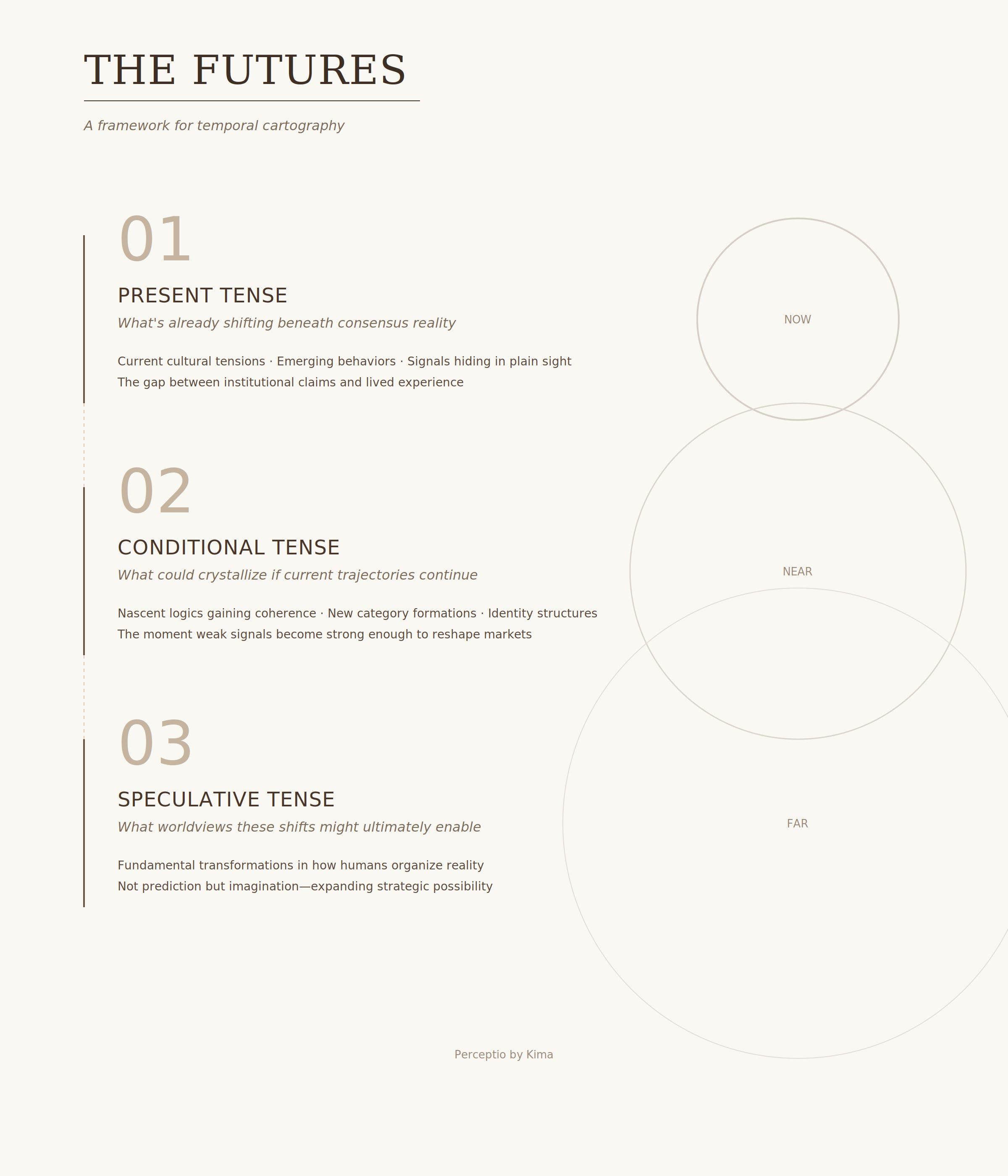
PRESENT TENSE: We optimized for performance, lost the infrastructure
Ritual marks time, creates boundaries, anchors meaning. But we stripped the infrastructure while scaling the aesthetic. Morning routines became content engines. Meditation became something you track. The mechanism was simple: aesthetics photograph, infrastructure doesn’t. Performance converts to metrics, repetition doesn’t.
Third places followed the same pattern. Starbucks optimized for mobile orders because transactions are measurable, lingering isn’t. WeWork sold community aesthetics while designing for churn.
Here’s the connection: ritual needs somewhere to happen repeatedly. Third places provide that ground. When you optimize third places for transaction, they stop being places people return to. When people can’t return to the same place, ritual becomes something they perform once for content, not something they build over time.
The rituals people are building anyway
When a close friendship ends through slow fade, some people create closing ceremonies. One woman I know held a “friendship funeral” with her ex-friend before they went their separate ways. A designer created a bound book of every project from a ten-year chapter before resigning. An artist marks the end of a creative era by destroying one piece—not as failure, but as acknowledgment the work is complete.
These are rituals for losses businesses won’t name. No bereavement leave for “the self I used to be.” No ceremony for the creative direction you’re abandoning.
What Western frameworks miss
The Western framing is narrow—ritual as optional, third places as amenities. But in many Arab cultures, hospitality is obligation. The majlis assumes your door stays open. In Japan, ritual is woven into daily life—tea ceremony, seasonal festivals, how meals are served. Many Indigenous cultures don’t separate “place” from “relationship”—the gathering creates the place.
The rituals emerging in Western contexts don’t fit our frameworks. We lack language for what people are building. Or maybe we’re looking in the wrong direction entirely.
CONDITIONAL TENSE: 3 ways this could go
Presence becomes luxury product. Time without optimization becomes premium offering. Genuine third places as members-only sanctuaries. The wealthy pay for what used to be free: somewhere to return to, permission to not perform. Beit Kotn hints at this—currently free for MENA creatives, but the model could easily gate. Imagine: $5,000 annual membership, waitlist to join. What was built for creative community becomes amenity for those who can afford it.
Or ritual infrastructure goes hyperlocal. People stop waiting for brands. Monthly dinners rotate through homes. Grief circles meet in libraries. Artists’ studios open monthly for creative witness sessions. Discord servers prototype the coordination layer—not the ritual itself, but the scheduling that makes ritual possible without permanent place. The infrastructure is distributed, maintained collectively, owned by no one.
Or ritual design becomes accessible practice. Ritual design could democratize: templates for closing ceremonies, scripts for transitions, frameworks anyone adapts. Open-source, like recipes. A GitHub for grief rituals. A wiki for life transitions. The practice becomes transferable skill.
These aren’t predictions. They’re trajectories. Which crystallizes depends on who builds what, and whether they can let go of ownership.
SPECULATIVE TENSE: When ritual becomes essential infrastructure
Presence gets protected status. Like religious observance in some cultures, ritual time becomes legally protected. “Ritual leave” recognized like bereavement leave—not just for deaths, but for friendship endings, career transitions, identity shifts. Third places given tax status similar to libraries—communal infrastructure, not commercial real estate.
Or ritual becomes portable practice. If third places keep dying, ritual adapts. Becomes something you carry, not infrastructure you visit. This already exists in diaspora communities, digital nomads, climate migrants—people building ritual without permanence, connection without proximity. The question: can it scale, or do humans fundamentally need stable ground?
Or the Western framework itself is the limitation. This entire analysis assumes ritual and third place are separate concepts needing connection. Other cultures don’t split them. Gathering is ritual. Ritual creates place. Place enables gathering. The rituals we need might already exist in cultures we’re not studying. The third places we’re recreating might require ownership models we’re not considering—commons, not commerce.
What this means for brands: Support infrastructure you don’t control
The shift:
NOW: Ritual as performance, third places as branded experiences
NEXT: Ritual as infrastructure, third places as commons
AFTER: Presence as protected right, gathering as obligation
Most brands stay in NOW. Few reach NEXT: supporting infrastructure they don’t control, building spaces community shapes, accepting slow timelines. Almost none imagine AFTER: some human needs should exist outside markets entirely.
What NEXT looks like:
Coffee company creates conversation guides for difficult talks, gives them away free. Supporting the conversation, not just fueling it.
Calendar app enforces rest periods, treats silence as valuable as productivity. Making rest the default, not the add-on.
Creative tools company hosts monthly sessions for abandoned projects. The gathering becomes ritual container for creative grief—the ideas you’re letting go.
Restaurant holds monthly dinners for disenfranchised grief. Friendship breakups, career endings, identity deaths. The space provides what therapy can’t: communal acknowledgment.
The catch: none optimize for quarterly metrics. All require giving up control. Most will feel wrong to marketing departments trained to own community.
But brands that understand this—that support infrastructure without claiming it—earn something deeper than engagement metrics. They earn trust through generosity that expects nothing back.
The truth still holds: you can’t manufacture community, can’t brand belonging. The moment you try to own either, you destroy what makes them valuable.
Perceptio is now also on Instagram in case you want to follow: @perceptio.substack
I explored why third places can't be manufactured in this piece. The same problem applies to ritual: the moment you try to own it, you destroy what makes it work.

You can access the previous publications in The FUTURES series below:
THE FUTURES
THE FUTURES is an invitation to look forward. We chase possibilities knowing they’ll shift. That’s the point—imagining shapes becoming. We deserve futures worth building toward.
Kima Sargsyan is a strategist and futurist writing Perceptio, exploring the honest contradiction between what categories expect and what only you can credibly do.
The soul of third places was never really about the place, eh? It was all about the repetition. Showing up to the same spot...seeing the same people...re-visiting to see the incremental changes at a favorite hangout spot...All gone now. Instead of cool restaurants, we get vending machines now. Do you think it's recoverable or is this just where we are now? Really enjoyed this piece, Kima. Subscribed, can't wait to read more of your work.
Beautiful post