

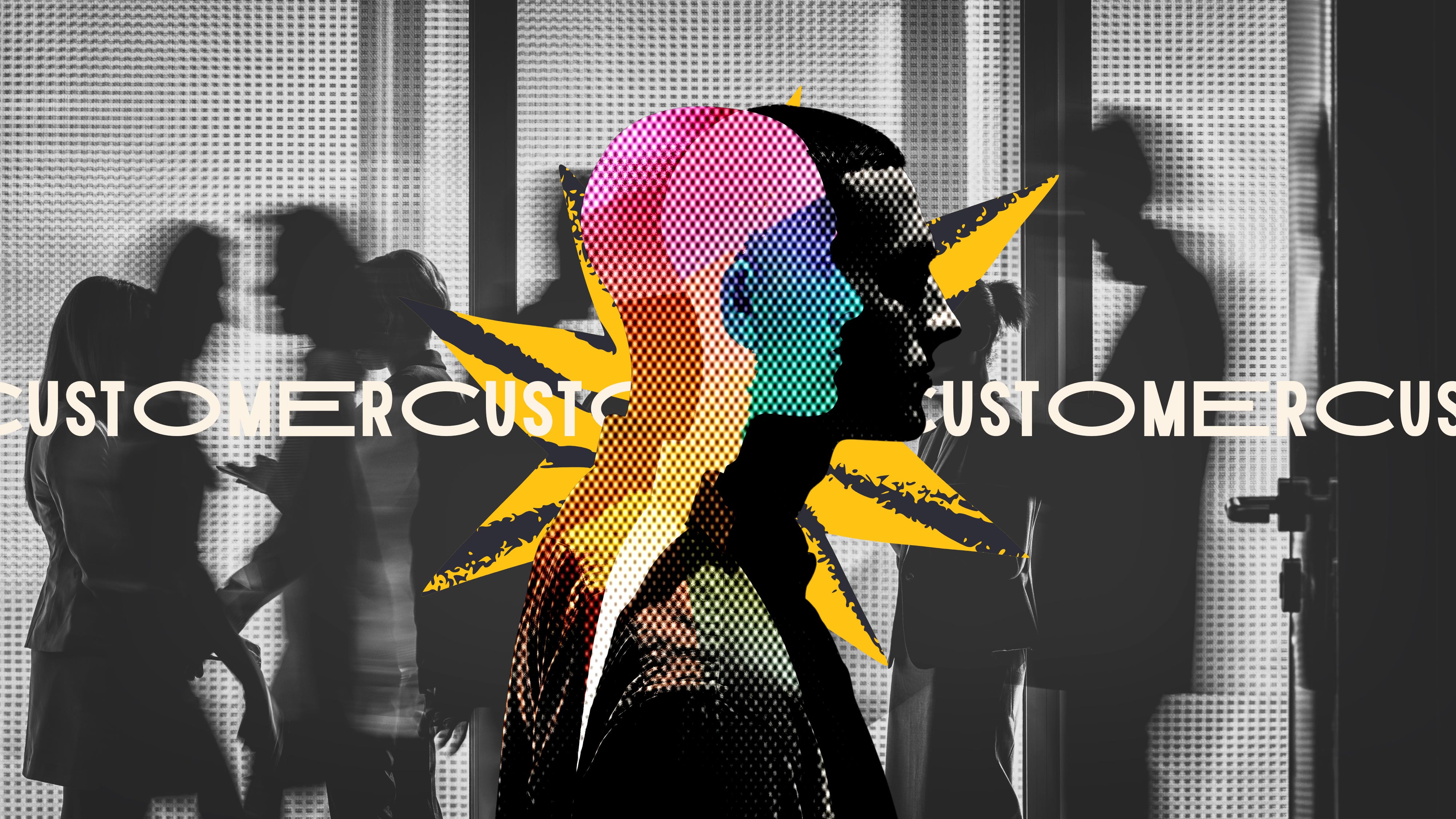
Your customer is three people.
The mirror self, the severed twin and the shadow self who buys at midnight.

This post was inspired by some nerdy in-person conversations with my friends who don’t work in marketing or strategy.
The beginning of the year is the best time to thing about your audience. Let me explain why. Every January, millions of people across the globe make promises to themselves they won’t keep (you just need to wait a month to see it). They don’t lack willpower, but the self who made the promise isn’t the self who has to keep it. The gym membership buyer and the person who has to wake up at 6am are different people living in the same body. It’s the reality brands are actually selling into, whether they know it or not.
I keep thinking about this problem from different angles: the person you’re marketing to isn’t one person psychologically. Your consumer is constantly negotiating between selves that don’t agree and are not aligned all the time. Who they think they are isn’t who they act like. Most brands pick one version of the person and pretend the others don’t exist.
1. The algorithm is showing you a self you didn’t author.
There’s a moment on every dating app where the algorithm shows you someone and you think: this is who you think I am?
The app has built a version of you from your swipes, your pauses, your 2am scrolling patterns. And now it’s showing you its conclusions.
The psychoanalyst Jacques Lacan called this the mirror stage. His theory that we don’t develop a sense of self from the inside out, that humans do not develop a sense of self intrinsically, but rather through external identification and mis-recognition. We form it by identifying with an external reflection that looks more coherent than we actually feel. The image becomes the identity. We’re all in the mirror stage now, except the mirror in 2026 is algorithmic and the reflection is made of data.
The “casual” photo dump that took 45 minutes to arrange. The Spotify Wrapped slide you screenshot versus the one you skip. The LinkedIn headline you workshopped for an hour. These are negotiations with the mirror. Attempts to close the gap between the self you feel and the self that gets reflected back.
Brands used to offer aspirational mirrors: this is who you could be. But now the mirror is already built, already reflecting, already telling people who they are before you get there. The competition isn’t for attention anymore. It’s for a place in the reflection, becoming part of how the algorithm sees them, how they see themselves seeing themselves.
2. Retargeting is showing you the selves you abandoned.
Everyone has a shadow cart. Items browsed, nearly purchased, abandoned. The algorithm remembers what you almost bought. It keeps showing you variations, haunting you with the self you didn’t become.
The person who almost signed up for the marathon. Who almost booked the trip. Who almost bought the course, the jacket, the ring.
There’s a term in developmental biology called vanishing twin syndrome where one twin absorbs the other in utero. The surviving twin sometimes carries a sense of primordial loss. A missing other who should have existed alongside them.
Consumer identity has its own vanishing twins. Every purchase forecloses other purchases. Every identity commitment kills adjacent possibilities. The algorithm tracks what died.
This is why retargeting feels so uncanny. It’s not just showing you products. It’s showing you selves you abandoned. The hiking gear ad following you around isn’t about hiking. It’s about the person you considered becoming when you browsed hiking gear at 11pm on a Tuesday, feeling trapped in your life.
I keep returning to this: the most effective marketing doesn’t speak to who someone is. It whispers to who they almost were or could still become. That’s the tender spot. That’s where desire still lives.
3. There’s a version of you the algorithm knows and you don’t.
It’s the self that emerges from behavior rather than intention. The one who lingers on certain images, clicks certain links, watches certain videos to the end. The one who engages with content you’d never admit to finding interesting.
I notice this in myself. The person who tells people I’m reading dense strategy books is the same person who watched four hours of home renovation content last Sunday. Both are real. Neither is the whole story. The algorithm knows about the renovation hours. My self-narrative doesn’t include them.
You say you care about sustainability. Your purchase history says otherwise. You say you’re over your ex. Your search patterns say otherwise. You say you’re not anxious about money. Your 3am browsing says otherwise.
People call this the “say-do gap” the distance between stated preferences and revealed behavior. But I think it’s more than a gap. It’s evidence of genuine multiplicity. The shadow consumer isn’t a lie. It’s not the “real you” either. It’s just one of several selves operating at different hours, with different hungers, often unaware of each other.
This is why surveys lie. Why focus groups mislead. Why people say they want one thing and buy another. It’s not hypocrisy. It’s the basic condition of having a self at all—which is to say, having several selves that don’t always communicate.
The question for brands isn’t which self to target. It’s whether you’re useful to the negotiation happening between them.
These aren't discrete selves with clean boundaries. They blur, they switch mid-session, they contradict each other. But asking which one is loudest at each moment changes what you build and when you distribute it.
What this means for customer journey
The traditional customer journey assumes one person moving through stages: awareness, consideration, decision, purchase, loyalty. It is portrayed as a clean line from stranger to customer.
But if the self is multiple, the journey isn’t linear. It’s a constant negotiation that never really ends.
The mirror self shows up in awareness, the identity the algorithm reflects back, the aspirational image your brand might become part of. This self scrolls, saves, screenshots. They’re constructing who they want to be seen as.
The severed twin haunts consideration, the abandoned carts, the almost-purchases, the paths not taken. This self lingers in retargeting lists, still reachable, still mourning the identity they didn’t commit to.
The shadow self drives decision and purchase, often at odd hours, often in contradiction to stated preferences. This self converts while the daylight self is asleep. They buy what the mirror self would never admit to wanting.
Most journey mapping asks: how do we move one person through these stages?
Better question: which self is present at each stage, and what do they need from us?
Example: DTC fitness apparel
The mirror self discovers you on Instagram. They save the post, maybe follow. They’re not buying yet but they’re auditioning you for their identity. Does this brand fit the version of themselves they’re constructing? This self cares about the grid, the aesthetic, what it says about them to be seen in this.
The severed twin shows up three weeks later, still in the retargeting funnel. They added the leggings to cart after a hard week at work, imagining the person who works out at 6am, who has their life together. They didn’t buy. But they’re still clicking the ads, still mourning that version of themselves. This self doesn’t need a discount code. They need permission to believe that self is still possible.
The shadow self converts at 11:47pm on a Tuesday. No discount, no abandoned cart email, just a purchase the mirror self will have to justify later. This self bought because they wanted it, not because it fit the narrative. They’ll wear it once, or it’ll become their favorite thing. You won’t know which until it happens.
Three selves but just one “customer.” Completely different needs at each stage.
Example: Premium skincare
The mirror self screenshots the product from a “what I use” reel. They’re building a reference library, what kind of person uses this? This self researches ingredients, reads reviews, wants to be the person who has a “routine.”
The severed twin is still sitting on the $120 serum they almost bought six months ago. They wanted to be someone who invests in their skin. Life got complicated. The retargeting ads feel like a small accusation.
The shadow self buys three products at 1am after a bad skin day, no research, pure impulse. This self doesn’t care about the routine narrative. They want a fix. They’ll either become a loyal customer or never repurchase depends which self does the reordering.
The 7am self researching your product isn’t the 11pm self who purchases. The self who fills out your survey isn’t the self who actually uses what they bought. We need to design for the negotiation, not the fiction of continuity.
Most brands are still speaking to a unified self that hasn’t existed for years. The interesting work is in the fractures where the mirror doesn’t match, where the twin still haunts, where the shadow keeps buying things the daylight self can’t explain. That’s where the tension lives. That’s where brands can actually be useful.
This piece is a companion to “Everyone can tell you let the algorithm choose,” which examines how algorithmic consumption shapes identity from the inside. This explores the same territory from the outside—the selves we didn’t choose, the selves we abandoned, the selves we don’t recognize.

This one is about how you build for them, not as a rational actor moving through a funnel, but as a nervous system navigating states it didn’t choose.

Such a great read! I love the peel back of the three customer layers, and how each has its own significance!
This is brilliant. I'm so glad I found your substack!