

The Oscars, ma, and what we're willing to wait for
A different way of approaching content distribution

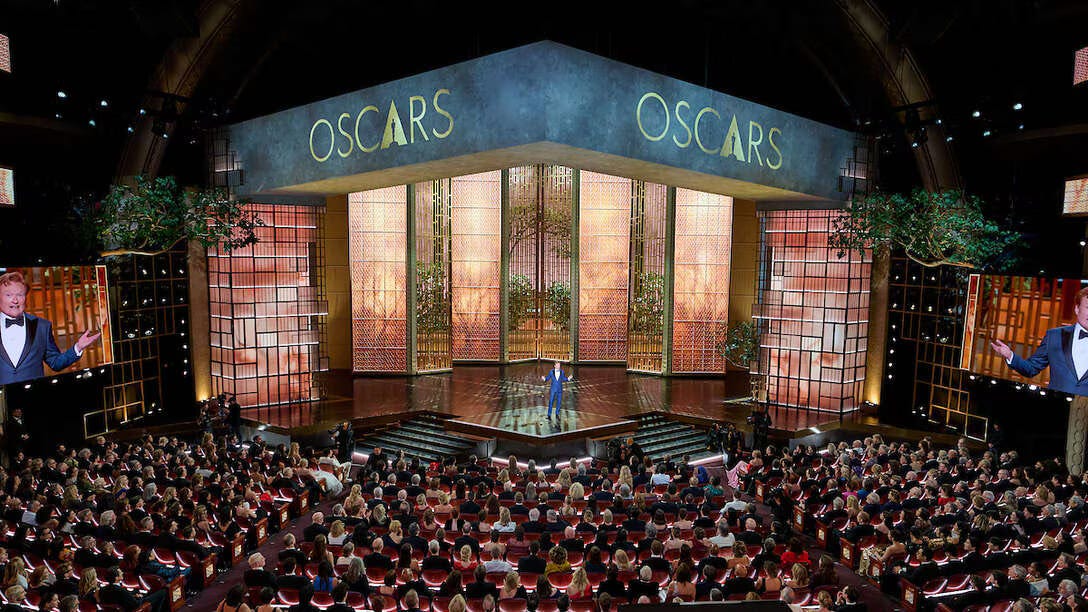
There is something very interesting about how Oscars work because it is not how the attention economy is supposed to work.
What the Oscars produce is something slower and stranger , a loop that runs in both directions. The ceremony sends you back into the work. The work sends you forward into the ceremony. Meaning accumulates in the interval between them, in a place the feed has never figured out how to reach. This is my way of saying they create a longer attention span for films.
There is a Japanese concept for what that interval is doing: ma. Written 間. Usually translated as negative space, which is accurate but not entirely. Ma is not emptiness. It is interval, the active presence of what is not there. The rest that gives the preceding note its weight. The silence after a question in which meaning is still being formed. Ma is not the container. It is what the container makes possible.
The Oscars, unintentionally, are a ma machine. Your brand content calendar, almost certainly, is not.
The feed doesn’t want you to build sequence. It wants you to fill it.
The attention economy’s founding logic is that attention is a commodity, it’s always extractable, optimizable, tradeable. What gets optimized is the rate at which new stimuli replace old ones before the nervous system finishes processing them. Engagement metrics measure stimulation, not comprehension. Virality measures transmission, not understanding. The system was never designed to produce discernment. It was designed to produce return visits.
This is the logic most brand content cycles are built on, even by people who know better. Post consistently. Stay visible. Feed the algorithm or it will deprioritize you. The editorial calendar becomes a treadmill: not a strategy, but a maintenance regime. Something to keep the brand present enough to avoid disappearing, busy enough to feel like progress.
What it produces is a brand that is always speaking and never arriving. The content does exist. The audience has nowhere to go with it.
Sequence is a design principle. Most brands have never used it.
The person who watched every nominated film before Sunday didn’t do it because an algorithm served them efficiently. They did it because a future event gave their attention a shape, a reason to sustain it past the point where the feed would have moved them on. The ceremony functions as a horizon. It tells you that what you are doing now will mean something later, in a specific context, in conversation with other people who did the same thing.
It is a design principle. And it is almost entirely absent from how brand content gets built.
Sequence means your October piece creates a question your November piece answers but only if the audience stayed. It means a product launch isn’t a moment but a structure: a signal that something is coming, the thing itself, and then a return that rewards the people who were paying attention from the beginning. It means your audience can be in an arc rather than just a feed. The difference is the intentional shape it takes.
Awards season works as sequence because each event does something the previous one couldn’t. The nominations create stakes. The guild awards build evidence. The ceremony resolves or refuses to resolve the tension that’s been accumulating for months. Each piece of the sequence retroactively changes the meaning of everything before it. One Battle After Another winning Best Picture made every earlier guild win mean something different in retrospect. That is ma as architecture. The interval between events isn’t dead air. It’s where the audience does the work of caring.
Most brand content has no such architecture. Each post is complete in itself, optimized for the moment of contact, designed to perform on the day it drops and be forgotten by the week after. There is no before that creates context. No after that rewards attention. No interval that accumulates meaning.
The evacuation of the interval.
This is the attention economy’s most efficient move: not destroying the horizon event, but removing the ma from inside it. Leaving the structure standing while optimizing away the thing the structure was built to protect.
Brands do this version constantly. The campaign structure exists. The content calendar holds. But the interval, the space designed to let meaning accumulate, gets filled in. A teaser followed immediately by the reveal. A launch followed immediately by the recap. No gap in which the audience develops anticipation, investment, the particular attention that only comes from waiting for something that matters. The architecture of sequence, hollowed out.
This is what your analytics are measuring when engagement looks fine but nothing sticks. The audience is touching the content. They are not inhabiting the arc.
The ceremony is over. Somewhere, right now, someone is watching Sinners for the first time because it won on Sunday. They didn’t need the marketing. They needed the horizon, and the season that built toward it, and the result that sent them back.
That gap between the event and the meaning it generates, between the release and the audience it slowly finds, is a design problem. And it has a design answer: build the interval. Give your audience somewhere to be between the things you make. Let the sequence do what the feed cannot.
Are you building a content calendar or an arc? They are not the same thing. Only one of them compounds.
About Kima
Kima Sargsyan is a strategist and narrative consultant writing Perceptio. She works with founders and execs on how their company is seen and how to shape it.
Want to keep talking?
Reveal, don't refresh.

Kate Bush earned an estimated £2.37 million when Stranger Things reintroduced “Running Up That Hill” to Gen Z. The song surpassed 1.5 billion Spotify streams by November 2025—not from her 1985 original recording alone, but because a new context revealed something timeless in it. Meanwhile, The Crow 2024 tried the same nostalgia play with Brandon Lee’s l…