

The feed ate the author. The Internet Is dead. Long live the Internet.
On what the algorithm buried and who's still digging.

I think about recipes the way other people think about gossip with a deep suspicion of the official story. When someone calls something a French dish, I want to know which France, and when, and whose hands were actually in that kitchen. The croissant, the most French thing imaginable, is Viennese. Most “national” foods are accidents of history that got nationalized later.The clean national story is almost always a compression. The real story is messier and more interesting: layers of hands, migrations, colonization, things taken without credit, things invented independently on opposite sides of the world by people who would never meet.
So when people started saying the Internet was dead(again), I recognized the feeling immediately.
In January 2021, a user posted a thread titled Dead Internet Theory which is now a famous conspiracy theory: Most of the Internet is fake. His argument: the internet had died somewhere around 2016. What remained was “empty and devoid of people” — a loop of bot-generated content, recycled threads, and manufactured engagement designed to serve corporate interests. It felt paranoid. It also felt correct in a way that was hard to shake.
The Atlantic covered it that September under the headline Maybe You Missed It, but the Internet ‘Died’ Five Years Ago. Their verdict: “wrong, but feels true.”
That was 2021. Then a Guardian columnist updated the theory in 2024: “In 2021, the internet felt dead because aggressive algorithmic curation was driving people to act like robots. In 2024, the opposite has happened: the robots are posting like people.”
Then in 2025, Spotify removed 75 million AI-generated spam tracks in a single year — bots gaming royalty pools with content that looked like music the way a shadow looks like a person.
The bots are real. The AI slop is real. But the more interesting problem started before any of that. It started the moment platforms decided context was friction.
The internet was supposed to solve the recipe problem. The whole promise was that you would never just encounter a thing, you would encounter its origins, the chain of hands it passed through, the argument it was part of. Hyperlinks were the architecture of meaning. You could always go deeper.
What happened instead: platforms optimized for attention, not understanding. The feed replaced the search. The recommendation replaced the curiosity. Cory Doctorow calls the inevitable end-state enshittification, every platform begins by serving users, pivots to extracting them, and ends by hollowing itself out in service of shareholders. Context became friction. Friction got removed.
What remained was the feeling stripped of origin, authorship, weight.
Time collapsed first. A song from 1983 and a song from last Thursday sit in the same algorithmic feed: equal thumbnail, equal thirty-second window, equal chance of going viral. This felt liberating for a moment. The archive opened. Everything was available. Read more about this in this amazing piece by Ollie Hall:

But flattened time was only the surface problem. The deeper shift is something harder to name: not just when stopped mattering, but who. You don’t just encounter a Kate Bush song without knowing it was recorded in 1985 — you encounter it without knowing who she was when she made it, what it cost her, what it meant to the people who heard it first. You scroll past an essay that changed someone’s thinking without knowing the writer spent three years arriving at that argument. You share a meme whose original image was made by an artist who never got credit, built on a reference that came from somewhere else, which itself was borrowed from somewhere further back.
Context-agnostic isn’t a media problem. When the who disappears from what we consume, we lose the ability to be changed by it. Being changed requires knowing where something came from, what world it was made against, who paid the cost.
This does something brutal to new work specifically. A creator making something today isn’t competing with other new creators. They’re competing with the entire archive of human cultural production, equalized by the algorithm, stripped of the accumulated meaning that gives older work its gravity. The catalogue has decades of weight the new work hasn’t had time to earn. And a context-agnostic feed doesn’t give you time. It gives you a thumbnail and three seconds.
The response has been real, if uneven. Paywalls multiplied. Substack grew. People started assembling what you might call a subscription stack: a deliberate portfolio of things worth paying for, and by extension, worth knowing who made them.
The paywall is, at its core, a context-restoration device. It says: this came from somewhere specific. Someone made it. Here is their name. Every subscription is a small act of locating a creator in the world which turns out to be a prerequisite for being genuinely changed by what they make.
The irony is that the people who most need a context-rich internet, the ones actually making the culture, are the ones most likely to be priced out of it. Artists, writers, musicians, teachers, independent creators. They’re also, more often than not, broke. They can’t afford sixteen Substack subscriptions. They can’t pay to exit the bad feed. So they end up taking what brands offer instead — the free concert, the invite-only dinner with a sponsor’s name on the invite, the pop-up that feels like a community gathering until you notice the logo. It’s not selling out. And it comes with a feeling most people don’t say out loud: grateful for the access, resentful that access required a sponsor.
The uncomfortable truth underneath all of it is simple: authentic culture became a luxury product. And the people who produce it often can't afford to consume it.
Here’s the thing: you can’t actually kill context. You can make it hard to find. You can bury it under an algorithm, price it behind a paywall, drown it in AI slop. But it doesn’t disappear, it just moves into smaller spaces, slower conversations, rooms where people still bother to ask where something came from.
Context is surviving in the small rooms: the newsletter where the writer still answers replies, the server where someone posts a link and someone else asks do you know the story behind this, the group chat where recommendations travel with the person still attached.
These spaces are not scalable, not optimizable, and will never be acquired for two billion dollars. That is exactly why they work. They are running on the same logic as a good recipe passed hand to hand: the transmission is the meaning.
The reader became the last hyperlink. When you tell someone where something came from, not just share the link but say this person has been building this for ten years, here is what it cost them. You’re doing what the internet was designed to do and gradually stopped. The practical version is less romantic than it sounds: follow the thread back. When something moves you, find out who made it. Subscribe, not just save. Tell someone else, with the context still attached.
It’s a small act. It compounds.
On that note, please share and subscribe.
Gen Z coming up online didn’t choose context-indifference. They inherited an interface that made context optional, then irrelevant, then invisible. They’re not incurious. They were handed a feed that answered every question before they thought to ask it, and quietly trained them out of the habit of going deeper.
Which is why the small rooms matter beyond the people already in them. Every time you carry the name with the work, you are doing something the feed cannot do and will not do: you are insisting that things have authors. That authorship is not metadata. That knowing who made something is not a bonus feature, it is the thing itself.
The recipe was never just a recipe. It was everyone who cooked it before you, every substitution made under constraint, every technique that crossed a border without a passport. The internet was supposed to hold all of that. For a while, it tried.
It can still be pressured into trying again. Not by the platforms. By us.
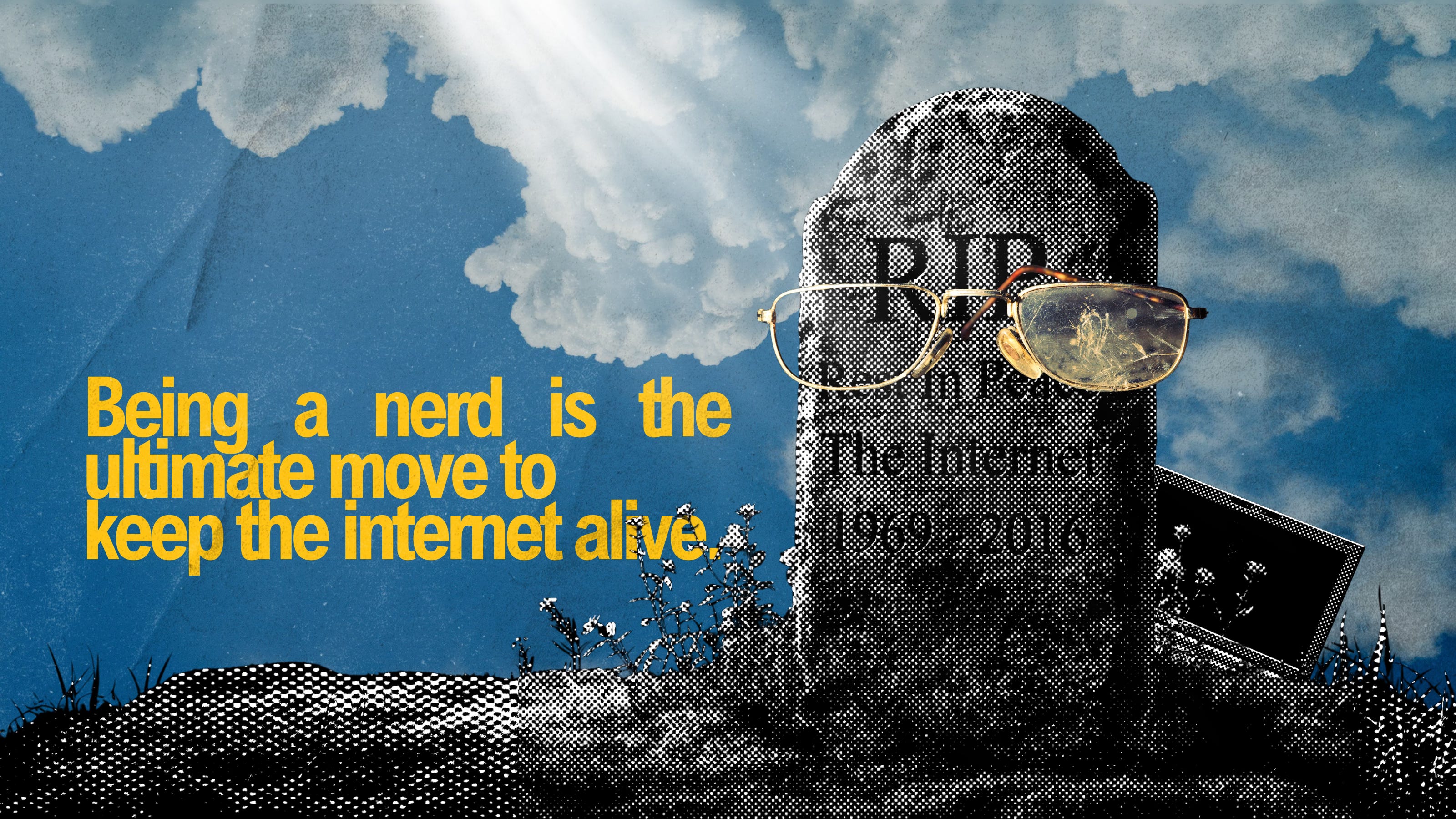
There's a group of people who never accepted the context-free feed. The ones who know every collaborator on every album. Who can tell you which animator did that one scene. Who build wikis at 2am for things the rest of us scrolled past. Who care, loudly and specifically, about the who behind the what. We called it obsessive. We called it cringe. We called it doing too much. But what they were actually doing (unpaid, uninstructed, purely because they couldn't help it) was keeping the thread alive. Fandoms are the most functional archival system the internet ever produced. The nerds turned out were the answer we were too cool to copy.
The curated internet is already here. A few people whose taste you trust. That’s it.
Continue reading


About Kima
Kima Sargsyan is a strategist and narrative consultant writing Perceptio. She works with founders and execs on how their company is seen and how to shape it.
Want to keep talking?
Praise be to nerds!
Thanks for the feature Kima! Really well framed
I love that the solution is still people. great read