

What makes a brand habitable
One of the brand layers left to defend is the one that can't pass through a screen.

A habitable planet is one where the conditions allow a body to actually survive there. Most planets we know of are uninhabitable ones. They are beautiful, legible from far away and lethal on arrival for us.
Most brand spaces are built to be seen from a distance. Very few are built to be lived in, to be experienced as deep as brand tries to reach with its products. Brand spaces are all survivable in the literal sense, but not in a way that makes anyone want to linger. This essay is about the difference, and about the layer of brand-building that decides it, the one that can’t pass through a screen.
I walked into the Issey Miyake store in Kyoto and didn’t know what I was feeling first. The building is a 132-year-old machiya, the kind of traditional townhouse that once dominated the city before concrete took over. Designer Naoto Fukasawa left the facade intact and built the interior around a single colour: sumi, the shade of charcoal ink diluted on rice paper. And there was a coolness to the space that air conditioning alone can’t produce, something the material itself was doing, the way old wood and stone hold temperature differently than drywall.


I had not yet looked at a single piece of clothing. My body had already decided what kind of place this was. It had also decided something more embarrassing, which is that I wanted to be the kind of person the space was built for. That is the actual trick of the store. It doesn't just make you want the clothing. It makes you want the identity of someone who deserves to wear Issey Miyake, and the clothes just become the means to that desire.
That store was doing something that took me a while to name. It was asserting a world, one with its own specific physical laws, a specific atmosphere, a relationship between the visitor and the objects, and leaving it to the body to figure out whether it belonged there. The sensory layer was not decoration on top of that world. It was part of the brand world.
A habitable brand is one the body can settle into before the mind has processed a single message.
Most brands are still treating sensory design of a space as the last mile. The strategy is set, the identity is built, the campaign is shot, and then someone chooses a store scent or approves a texture on the packaging. Sensory sits at the end of the process. Which means it's asked to finish a world it was never allowed to define.
That experience is produced by the accumulated sensory decisions: the weight of the door handle, the temperature of the room, the sound the floor makes, the smell sitting in the air at a level too low to consciously register but high enough to shape the tone of everything that follows. In the brands that get it right, these are the first thoughts, the material from which everything else is built outward.
Smell works differently because it bypasses evaluation entirely. Sound, colour, even texture can be absorbed while the analytic mind runs alongside them. Smell arrives in the limbic system directly, pre-judgment. It registers as environment before it registers as choice. A brand that controls its olfactory signature is making a claim about what the air of its world is made of.
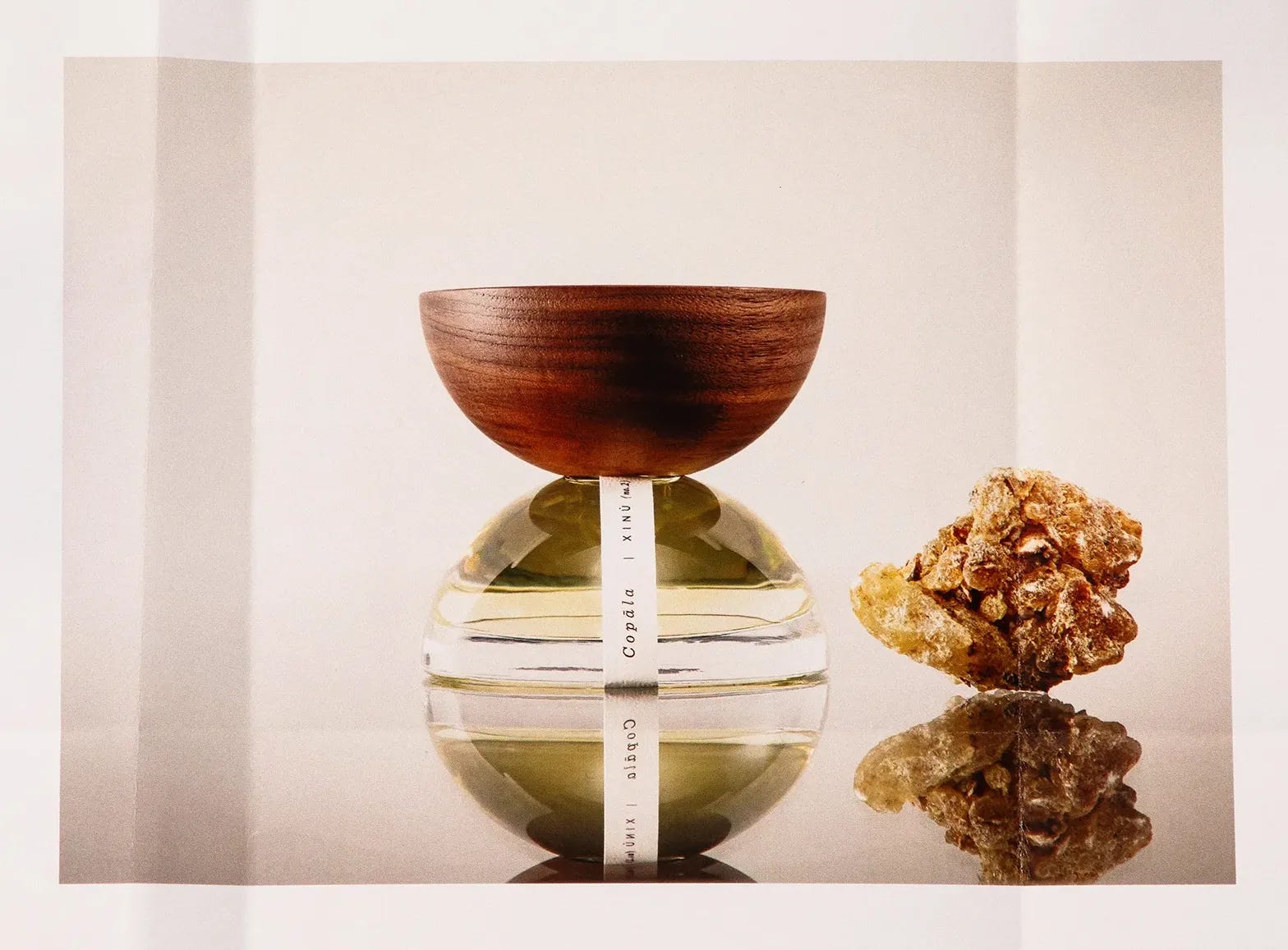
I felt something similar earlier the same year when I was in Mexico City (CDMX) visiting Xinú fragrance boutique. Xinú understood this from the beginning, which is why its name means “nose” in Otomi. Founded in Mexico City in 2016, the brand builds its perfumes from the botanical richness of the Americas, and its stores from the same logic. The Juárez boutique occupies a former car garage, transformed by Esrawe Studio and Cadena Concepts into a wood pavilion surrounded by a living garden, each of the six signature perfumes displayed alongside the raw organic materials like plant, bark, resin that produced it. The store is not illustrating the brand. The store is the brand argument made spatial. You understand what Xinú believes about the relationship between place and smell by standing inside it, long before you have read a word of copy. It is minimalistic and maximalistic at the same time.


The perfumes themselves carry the same belief. They are inspired by the aromatic botany of the Americas. I left with a bottle of Copála, built around copal resin, the smoke of mesquite wood sitting against a powdery vanilla with pink pepper. The sculptural bottles are designed to be repurposed as flower vases or incense holders once the perfume is finished. That is world-building that invites the visitor to stay creative with the purchase.
Sensory design is not a new trend, it is older than branding as a category. The problem and challenge we have right now is that the digital expression of brands is homogenizing everything. Visual identity can be generated. Tone of voice can be approximated.
The fix is not a bigger sensory budget at the end of the process. It’s a sequencing change. What does this feel like, what should the air be made of, what does the weight of this object say? Those questions belong in the same meeting as the positioning questions, before the identity is built.
Test this: walk into your own brand’s space and notice what what you sense. If the answer is nothing, there is work to be done.
I think about this even for the newsletter you're reading right now. What it would feel like if this existed in the physical world. What it would smell like. What the texture would be. When I imagine it as an object, it isn't a book or magazine. It's closer to a museum, or a library, because the subject is cultural intelligence in the broadest sense, and that doesn't fit between two covers. You wouldn't read it so much as move through it, enlightening in one room, overwhelming in the next, imperfect by design. It would smell like a deep, warm, sweet white floral with an earthy, woody undertone beneath it, something that announces itself before it settles. I don't know if that world will ever exist outside my head. But the fact that I can describe it this precisely is the whole argument.
One sense is missing from the brand space that I just described and it's deliberate. Sound is Daniel Cutler's territory. As I was writing this piece, he published about the high cost of free sound and how Saint Laurent systemized sound into a brand code. It nicely picks up exactly where this essay stops.
Read it.

Speaking of sound and music, go check out the new song by KYZR BLUE:
About Kima
Kima Sargsyan is a strategist and narrative consultant writing Perceptio. She works with founders and execs on how their company is seen and how to shape it.
Want to keep talking?
This is such a great piece, I was completely absorbed by it and therefore very surprised to have the author mention my recent Substack post at the end of it... thank-you, Kima : ) - "That store was doing something that took me a while to name. It was asserting a world, one with its own specific physical laws, a specific atmosphere, a relationship between the visitor and the objects, and leaving it to the body to figure out whether it belonged there. The sensory layer was not decoration on top of that world. It was part of the brand world." Boom!