

Reveal, don't refresh.
What entertainment teaches brands about mining their archives

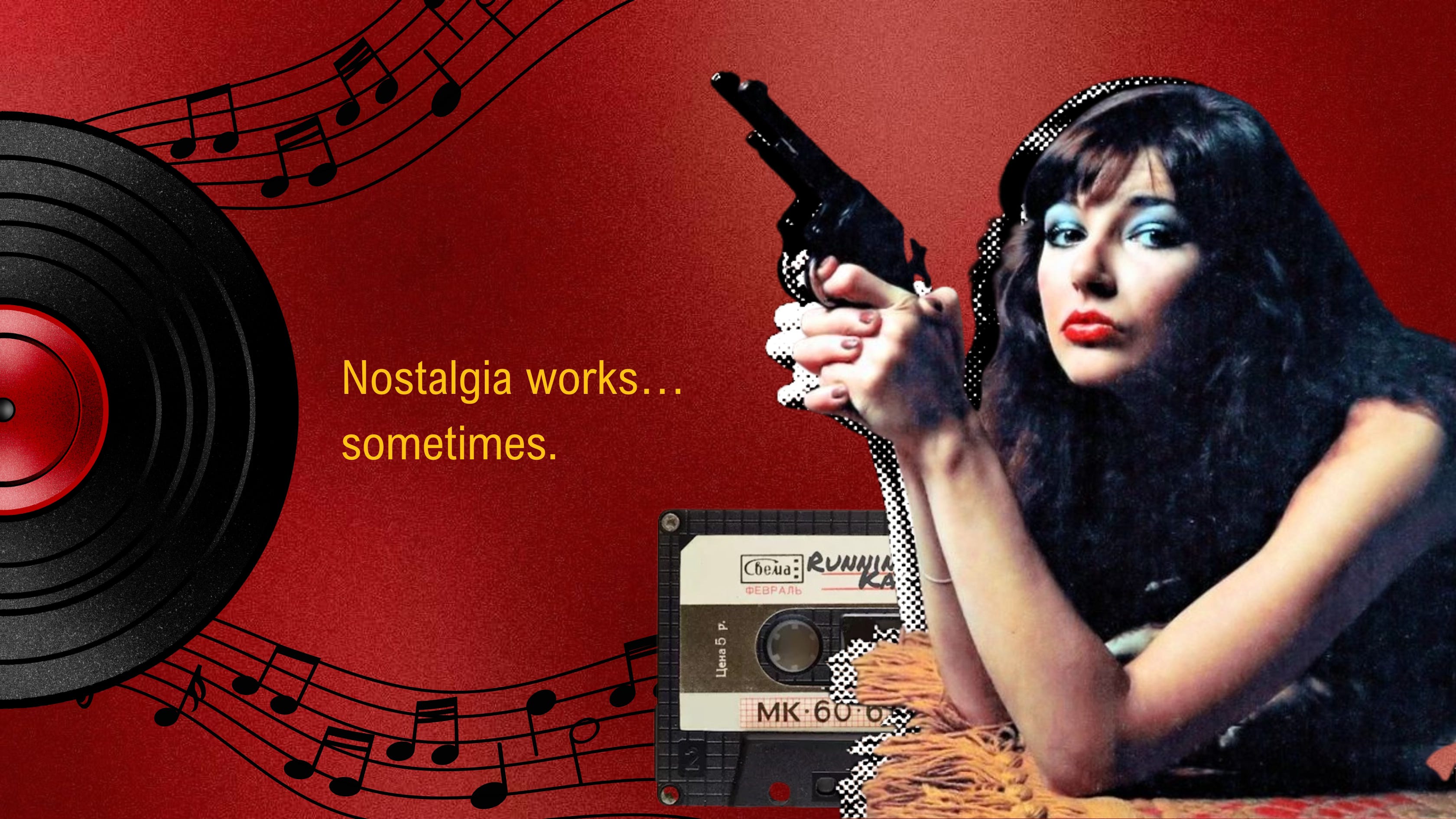
Kate Bush earned an estimated £2.37 million when Stranger Things reintroduced “Running Up That Hill” to Gen Z. The song surpassed 1.5 billion Spotify streams by November 2025—not from her 1985 original recording alone, but because a new context revealed something timeless in it. Meanwhile, The Crow 2024 tried the same nostalgia play with Brandon Lee’s legacy and became, in one critic’s words, “a fate worse than death: apathy.”
Every single top-ten box office film of 2024 was a sequel or remake. The archive has become the safest brief in culture. But not all nostalgia pays back the same way. Some heritage plays compound equity. Others extract it until there’s nothing left.
Royel Otis’s cover of “Murder on the Dancefloor” has 50 million Spotify streams. Iron & Wine’s take on American Football’s “Never Meant” gets called “justice to a song so quintessential to what emo has become.” Yet audiences delivered a 91% rejection rate to remakes compared to originals (2019 study by Casumo and Verve Search).
Same nostalgia play, opposite outcomes.
What can be separated and what can’t?
Music treats composition and performance as fundamentally separable. A song exists independent of any single recording. Hundreds of covers of “Running Up That Hill” didn’t diminish Kate Bush’s original, they only confirmed the song’s cultural elasticity.
Film treats authorship as inseparable from execution. The Crow is Brandon Lee. Remaking it doesn’t honor the original, it competes with it for the same psychological real estate. When studios announce remakes, audiences don’t hear “new interpretation.” They hear “replacement.”
The brand question: Is your equity in the separable framework (open for reinterpretation) or the inseparable execution (protected territory)?
McDonald’s menu operates as composition—the framework enables endless local reinterpretation (McSpicy Paneer in India, Teriyaki Burger in Japan) without threatening core identity. Each market “covers” the concept while crediting the original. But Apple’s product design is inseparable execution—each iPhone represents singular authorial vision. Third-party “reinterpretations” aren’t covers, they’re competitors.
Know which game you’re playing.
Productive vs. destructive violation
Cover songs succeed through productive violation—they preserve enough familiarity to trigger recognition while creating enough distance to feel fresh. When The Fray performs Olivia Rodrigo’s “vampire,” the generational reversal creates meaning. The violation serves the original by revealing something previously unheard.
Movie remakes fail through unproductive violation. They promise nostalgia but deliver something simultaneously too similar (creatively redundant) and too different violating attachment. The 2024 Mean Girls became “the same but prettier”—close enough to feel derivative, distant enough to miss the original’s wit.
The exception proves the rule: Villeneuve’s Dune succeeded because Lynch’s missed Herbert’s vision so badly that reimagination felt like fulfillment, not replacement.
The brand question: Does your refresh reveal something new about the original, or does it just modernize cosmetics?
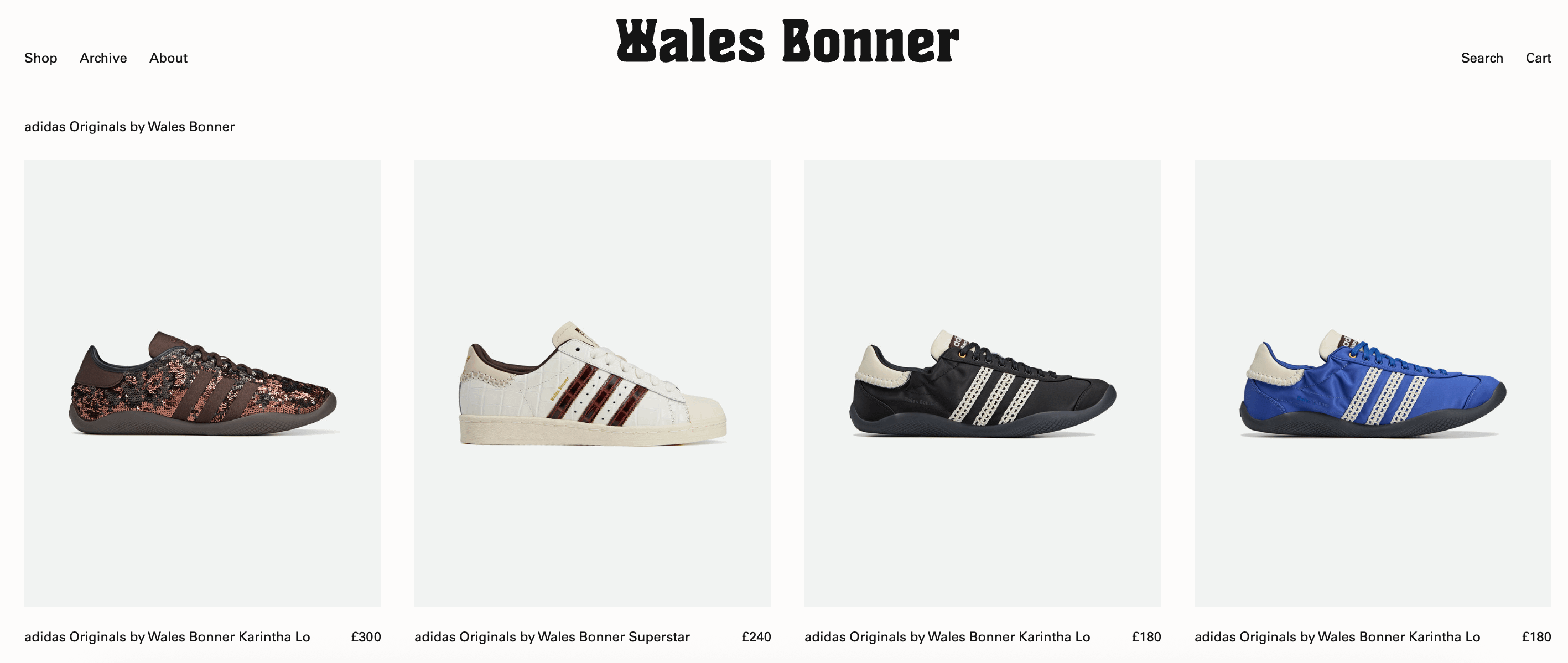
Wales Bonner reinterprets Adidas Sambas by revealing hip-hop culture’s Afro-Atlantic foundations—the sneakers gain meaning they didn’t previously hold. Gucci’s Sabato de Sarno dressed Enzo Mari’s 1967 calendar in Rosso Ancora—timeless design codes translated to contemporary brand language. Both revelation, not refresh.
Brands that refresh without revelation produce the remake problem—changed enough to alienate loyalists, unchanged enough to bore newcomers.
Expansion vs. displacement
Cover songs exist in eternal present. Spotify doesn’t organize chronologically—playlists mix decades freely. When you hear a cover, you’re not choosing it over the original. Both versions coexist. Kate Bush’s 1985 original and Meg Myers’s 2019 cover both gained streams from Stranger Things. Covers, in a sense, expand rather than compete.
Movie remakes compete for limited present. Theaters show one version at a time. Streaming platforms feature the remake, relegating originals to deeper catalog. The remake doesn’t expand, it displaces.
The brand question: Does your refresh exist alongside what came before, or does it replace?
Who gets credit?
Music attributes covers explicitly. Every streaming platform lists “originally performed by...” Kate Bush earned millions from Stranger Things because attribution infrastructure routed value back to her. The system compounds credit.
Film remake attribution is invisible. The 2019 Lion King earned $1.6 billion. How much went to the 1994 creators? Structurally unclear. The original creators become footnotes rather than ongoing beneficiaries.
This is why covers feel like celebration and remakes feel like exploitation.
The brand question: Does your evolution compound legacy or obscure origins?
When stakes kill creativity
Recording a cover costs modest studio time. Low stakes enable experimentation. Failed covers disappear without catastrophic loss. This is why 2024 saw everything from punk takes on Bob Marley to folk versions of Pokémon themes—playful reinterpretations testing boundaries.
Remaking a film costs hundreds of millions. Studios invest this capital betting on guaranteed audiences rather than artistic merit. But massive fixed costs eliminate creative risk. Remakes become safe and formulaic because failure at this scale is existential. The Crow remake cost $50 million and bombed. That’s 500 albums worth of covers, each testing different directions.
The brand question: Are your heritage bets sized for exploration or survival?
Low stakes explore. High stakes imitate.
Early warning signs
The market will tell you whether you’re covering or remaking. But you can read the signals before launch:
You’re probably remaking (extracting) if:
Internal conversations focus on “updating” rather than “revealing”.
The brief emphasizes what to preserve rather than what to discover.
Success metrics measure recognition rather than reappraisal.
Fans feel defensive rather than curious when they see early work.
You’re discontinuing the original to make room.
You’re probably covering (adding) if:
The reinterpretation makes people revisit the original with fresh eyes.
Both versions can coexist without competing for attention.
Attribution to the source feels natural, not obligatory.
The new version says something the original couldn’t.
Loyalists feel the brand “gets it”.
Dune: Part Two grossed $715 million because it revealed what Lynch’s original couldn’t, not replacing but fulfilling. Beetlejuice Beetlejuice earned $450 million by expanding rather than rebooting, Michael Keaton returning to add new chapters, not erase old ones.
Cover the song, don’t remake the recording.
Kima Sargsyan is a strategist and futurist writing Perceptio. She helps brands locate the honest contradiction between what their category expects and what only they can credibly do. If your team needs someone to show what else is possible and challenge comfortable assumptions: let’s talk.
Continue reading


