

Prediction markets and what it means for brands.
Annoyingly priced without permission

Polymarket recently announced a partnership with Substack, essentially embedding live prediction market odds into newsletters (if the author chooses to use it). It sounds like just another product update but it is s actually more than that. Prediction markets have crossed a line from niche financial instrument or betting product to something everyone can use to narrate the stories and the future. That crossing is worth examining in details. Betting is not about accuracy, it is about prediction, it's also about what we want from knowing.
It’s a story about what happens when the infrastructure of belief and perception gets formalized. And I think brands are almost completely unprepared for what that means.
But first
The term “oracle” is a nod to ancient Greece, where leaders went to the Oracle at Delphi to get answers on matters of state. When the oracle speaks, it doesn’t describe the future. It participates in making it. The prophecy shapes the behavior that produces the outcome.
Prediction markets are not new. The Iowa Electronic Markets ran their first election forecast in 1988 and outperformed professional pollsters 75% of the time. Best Buy and many other companies seemed to run internal prediction markets to surface what their own employees actually believed versus what they said in meetings.
What’s new is that the oracle is now public. And it’s pointed at everything all the time.
Polymarket, one of the prominent prediction market platforms, now hosts contracts on product launches, company decisions, cultural moments, creative outcomes, political news and so much more.
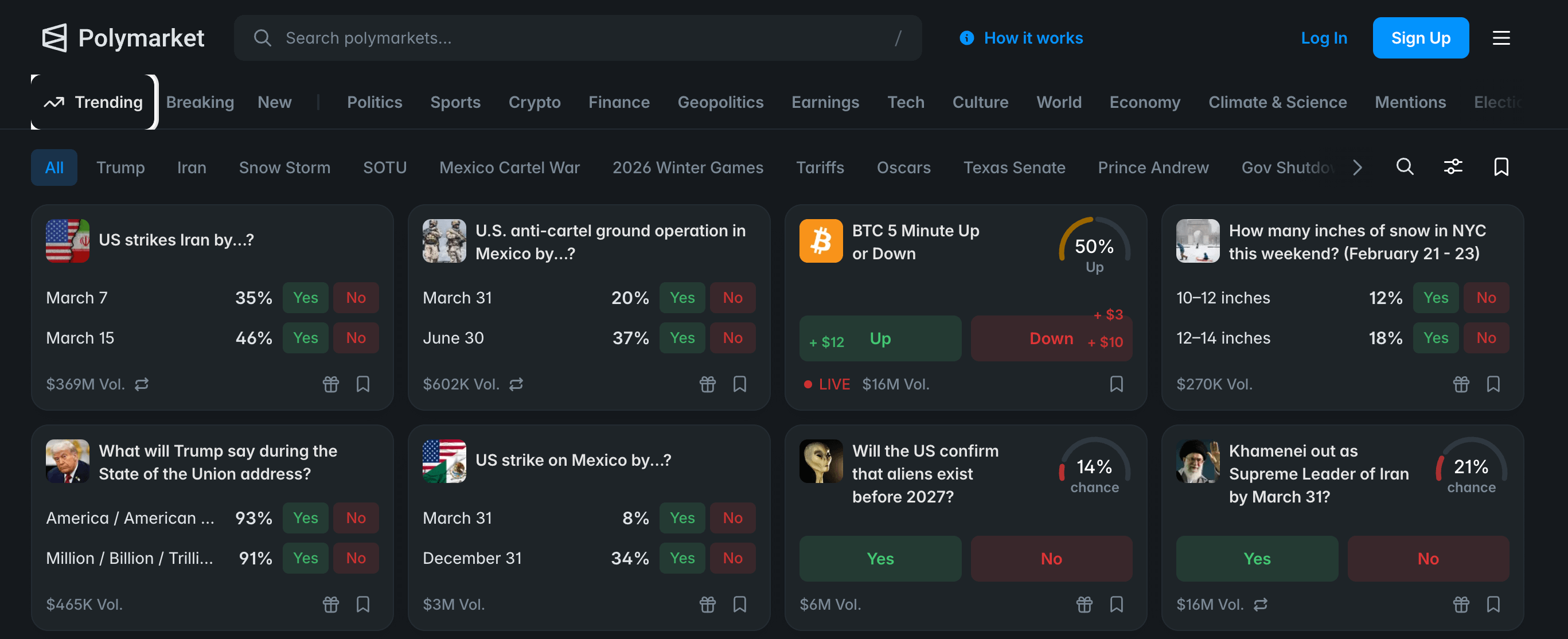
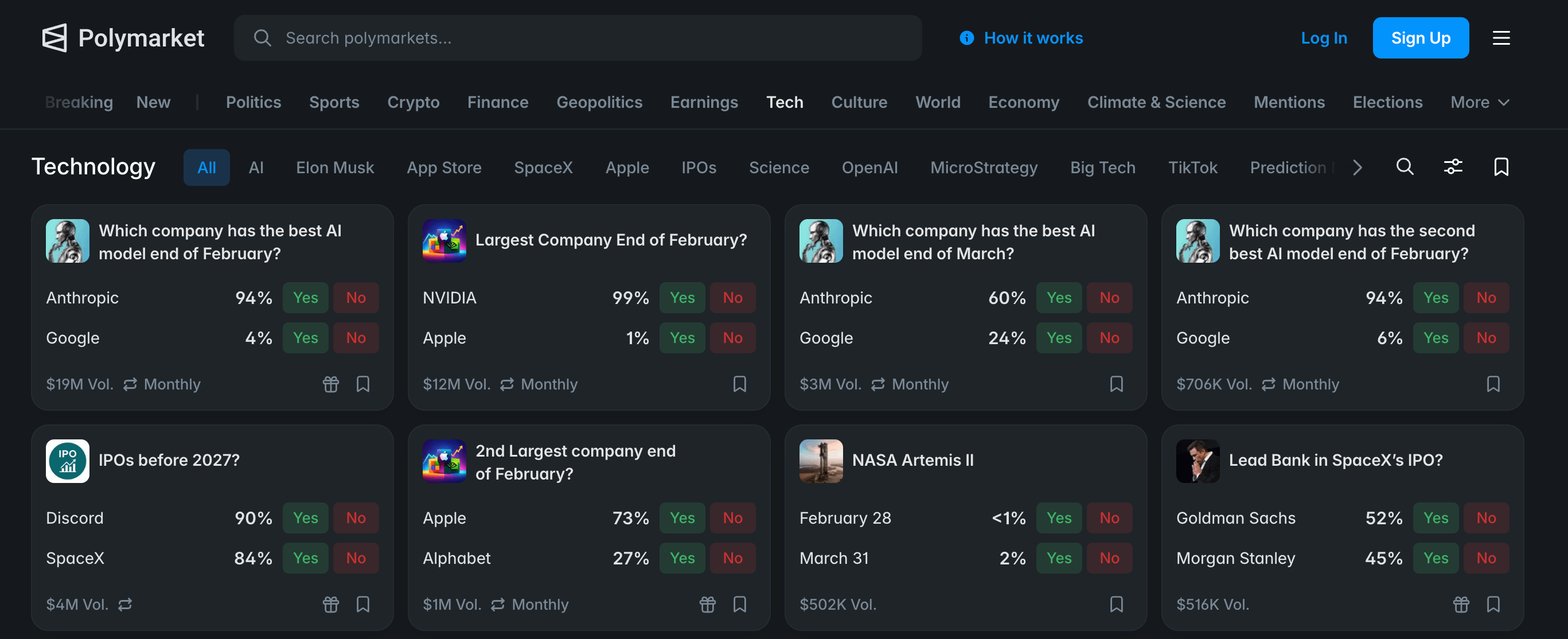
Now, Substack announced a partnership with them in early 2026, embedding live prediction markets directly into newsletters. This is the moment worth pausing on. When a writer embeds a live prediction market in her newsletter, she’s no longer just analyzing what might happen, instead she’s creating the instrument through which her readers price it. Her editorial credibility becomes the liquidity that makes the market function. Her audience’s engagement becomes the mechanism that moves the probability. The line between the analysis and the bet, between the writer’s conviction and the reader’s wager, starts dissolving. I could easily add one just from dropdown menu as I was creating this post. It is that easy and accessible to everyone.
Readers can choose not just consume analysis anymore. They can price it, they can bet on it. And the writer who shapes what they believe about the world is now, structurally, shaping what they bet.
The question this raises isn’t “is this useful for forecasting?” The question is: what happens to a brand and to a society in general when its future becomes a trade-able contract and the people setting the odds are the same ones writing the story? How ethical is this?
Some people treat prediction markets as measurement tools with better forecasting, cleaner signal and less noise.
When a market assigns 34% probability to your product launch failing, that number gets shared. It gets written about, it gets seen by your potential partners, shareholders, your press contacts, your next hire who’s deciding between you and someone else. The market’s forecast becomes part of the environment your launch exists inside. Perception and price oddly become the same thing.
Brands have always lived inside reputation. What’s changed is that reputation now has a ticker.
The frame is always open now.
There’s a structural irony worth naming: the brands that built their power on narrative control, on carefully managed stories released on their own timeline, are the least prepared for this.
The legacy brand playbook is: control the frame. Choose when to speak. Shape the arc. Reveal, don’t expose.
Prediction markets invert all of this. The frame is always open and the market speaks whether you do or not. Silence doesn’t protect the story, it gets priced as uncertainty, which in a prediction market reads as risk.
The brands that thrive in an oracle economy could be the ones with the most legible intentions. When people can read what you actually stand for, not what you claim, the market prices that clarity as confidence. Opacity becomes a liability.
The tool built to aggregate information rewards the brands that have already made information unnecessary. If what you do is consistent with what you say, there’s nothing to bet against.
Are prediction markets gendered?
There’s a harder question underneath this one, and it doesn’t get asked enough.
Whose crowd is doing the predicting?
According to SimilarWeb, Polymarket’s user base is 70.79% male. The same approximate ratio shows up in sports betting, in financial trading, in most structured forecasting environments. This may not be just a demographic accident. The platforms were built by specific people, for specific behaviors, and they attracted the communities that fit those behaviors. And that crowd has a particular relationship to risk, to confidence, to which futures feel worth betting on.
When a prediction market says your next cultural move has a 28% chance of landing, it’s worth asking: landing with whom? Whose priors are embedded in that number? Which communities aren’t in the room when the probability gets set?
The potential solution here is to build something the market can’t price.
The obvious plays are avoidance and optimization, you can just ignore the market and hope it stays peripheral, or learn the system and manage toward favorable probabilities. Both lead to the same place. One just gets there faster. The market prices your absence as uncertainty and your optimization as theater. Neither move changes what people actually believe about you.
The harder, more interesting option is to build something the market can’t easily price.
Not because you’re hiding from scrutiny. Because what you’re building operates on a timeline, a logic, and a set of values that don’t map cleanly onto a binary contract.
Complexity as strategy looks specific. It’s not “be authentic” or “have values.” It’s the deliberate construction of a brand that functions across multiple registers simultaneously, so that no single outcome can define it, and no single contract can contain it. Complexity isn’t diversification for its own sake. It’s the accumulation of evidence across different surfaces, over time, that what you stand for is structural, not a position you took, but a condition you operate from. It makes you legible enough that people trust you, but irreducible enough that no single probability can hold you.
The test: can someone write a clean prediction market contract about your next five years? If yes, you’ve made yourself too simple.
Don’t get good at being priced. Build the kind of cultural infrastructure that resists simple pricing through genuine complexity.
The bet became explicit.
Prediction markets are revealing something the last decade of brand strategy tried to smooth over: the market has always been betting on you. The Twitter conversation, the Reddit thread, the group chat where your campaign got dissected the morning after launch, these were always informal prediction markets, running without formal contracts, settling without payouts and with real people feedback behind them.
What’s changed is formalization. The bet became explicit.
And with that formalization comes a clarifying question that every brand now has to answer whether they want to or not:
When people bet on your future what do they actually believe about you?
That gap between the story you tell and the probability the market assigns is where strategy lives now.
About Kima
Kima Sargsyan is a strategist and narrative consultant writing Perceptio. She works with founders and execs on how their company is seen and how to shape it.
Want to keep talking?


