

Overcome learning plateaus
In the whirlwind of today's job market, the race to acquire new skills is more intense than ever. Yet, many find their progress frustratingly slow, trailing behind the pace they aspire to.


According to IMF, AI is projected to impact nearly 40 percent of global employment, with some jobs being substituted and others augmented. A lot of people are trying to learn new skills or improve the transferable skills they have. If you are one of these people and experience learning plateaus, this might be for you.
It's not uncommon to experience learning plateaus, where progress seems to stall and motivation wanes. Let’s frame these plateaus as opportunities to strengthen and grow, rather than setbacks.
Learning plateau signs
You can check if you may have reached a learning plateau by observing your mood and recent activity. Have you recently started feeling bored or uninterested in the subject you were thrilled to learn about? Or maybe you don’t see any improvement in performance or results? Perhaps, you have started avoiding new challenges or opportunities to learn, or stopped seeking feedback and guidance from others. It may feel like you have lost your focus and motivation. If any of these signs are present, a learning plateau has likely been reached and you need to reset your approach. Don’t give up on learning yet.
Here are some questions to evaluate your learning experience and guide you to make changes in your approach:
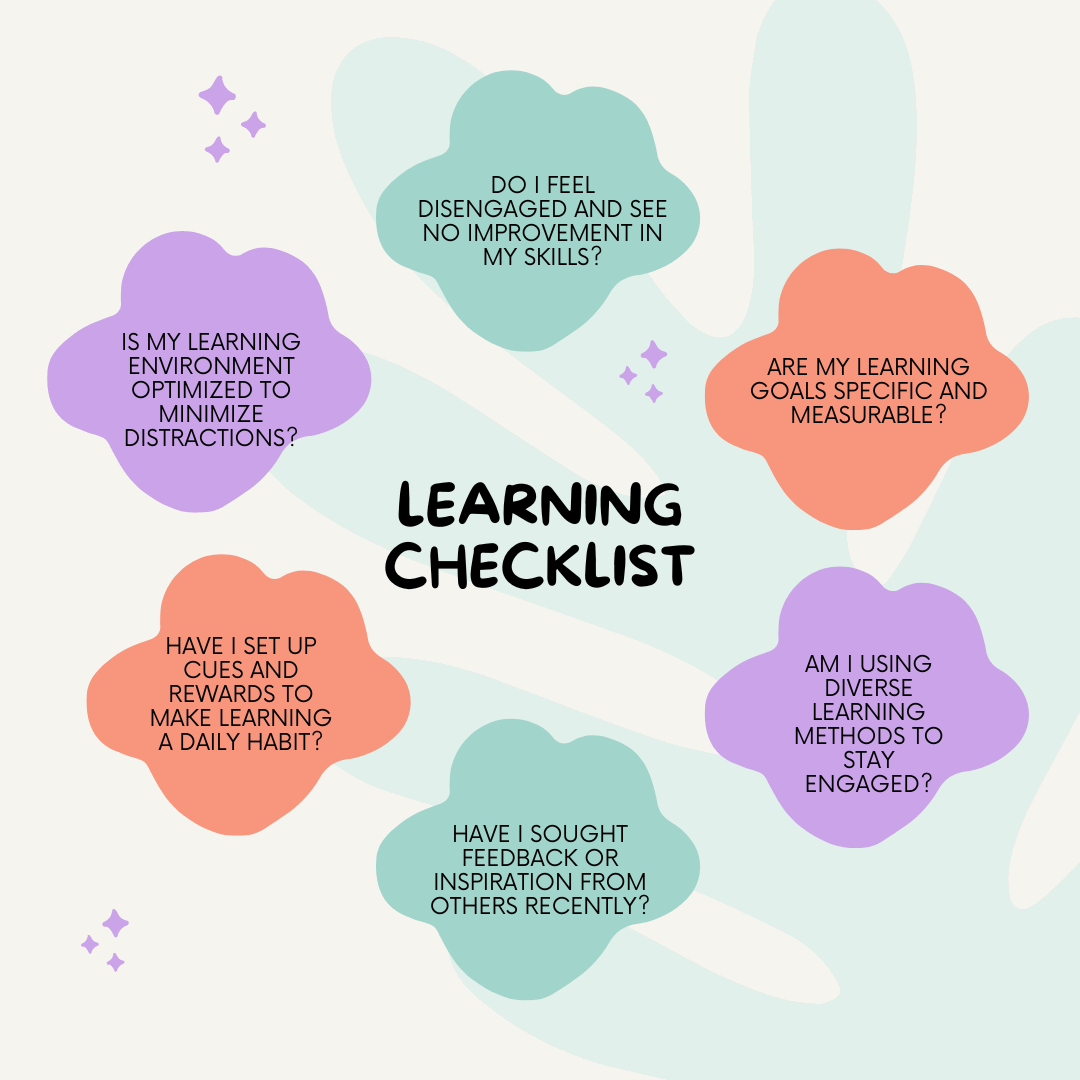
How to break through the learning plateau
First and foremost, if you have a chance to take a break, do it. Take breaks regularly and often. You don’t have to learn and work all the time. Take some days off from learning, check on yourself, your eating and sleeping habits, go for a walk. Give your brain a chance to rest.
Practice mindfulness. Listen to your body and take care of yourself.
When and if you are ready, break through learning plateaus with these techniques:
Plateau anticipation
You can anticipate periods of monotony and loss of motivation. Be ready to change your learning strategy, switch between content formats, and schedule rewards for yourself for each milestone completion. Don’t hang up on a material, book or course. Instead, switch to learning about the same topic from another source. Use Quora to ask questions or Reddit to find like-minded people to discuss a topic. Switch from a book to a podcast to learn a POV on the same topic. These experiences are still part of your learning journey even if it feels like you are behind on a book or a course.
Mixing learning techniques
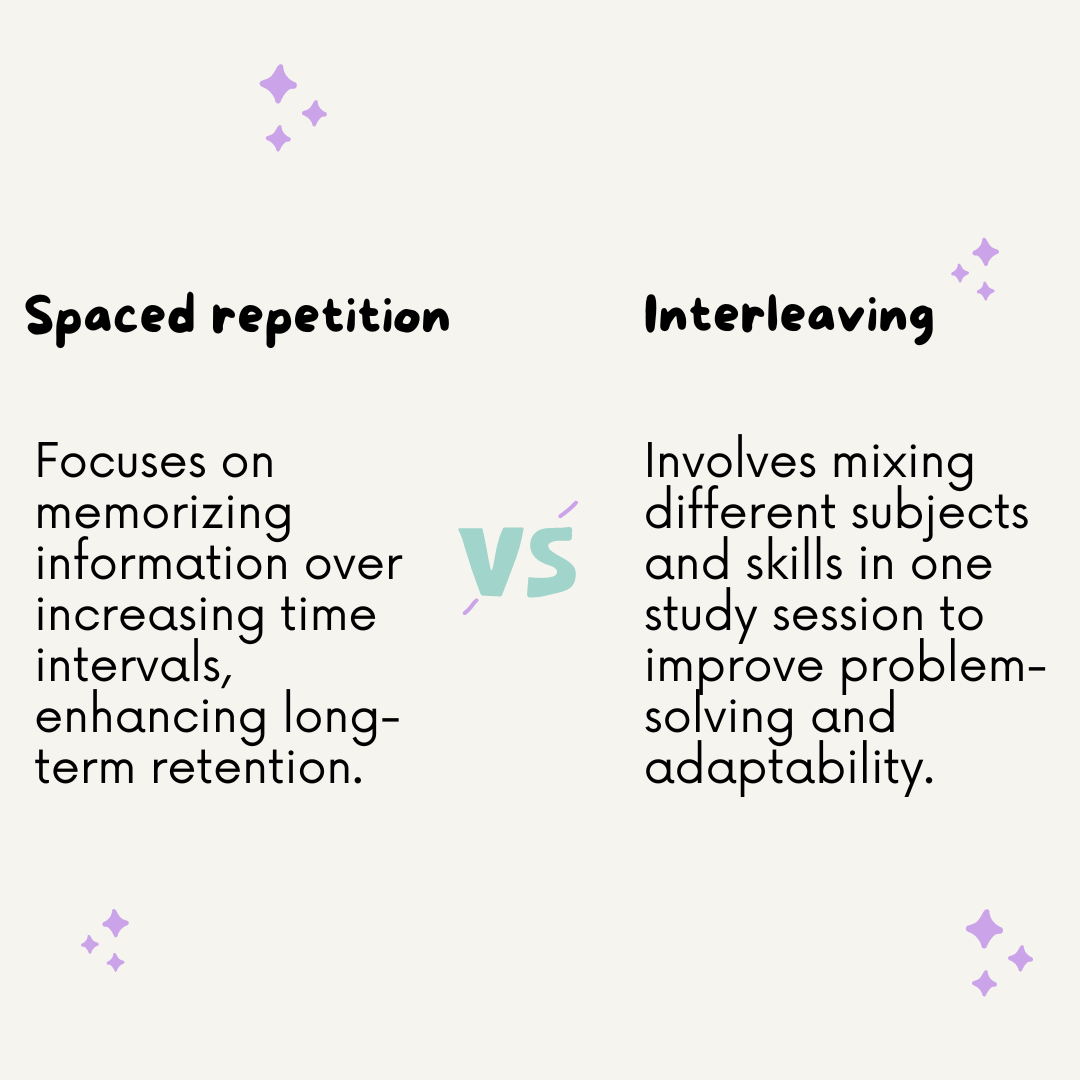
Change the learning format or try a different material that will give you a chance to rest and still learn without wasting time. Try spaced repetition and interleaving to keep your study techniques sharp.
Spaced repetition involves reviewing material over increasing intervals of time, enhancing memory retention.
Interleaving, or mixing different subjects and skills during your study sessions, improves problem-solving abilities and adaptability.
While spaced repetition is key for deep memory retention, interleaving boosts the ability to apply knowledge across different scenarios.
Let’s look into a scenario where you need to get ready for a project management certification exam.
Use spaced repetition: Studying project management principles today, revisiting them after a week, and again before the exam to cement the knowledge.
Then, use interleaving: Switching between studying risk management, resource allocation, and stakeholder communication strategies in one study session to build a well-rounded understanding.
Balance methods: Using spaced repetition to remember project management methodologies, while interleaving prepares you to apply these methodologies across different project scenarios for the certification exam.
Seeking feedback
You can talk to other people who are either where you want to be or who are on the same path as you trying to learn and grow. Seek feedback, hear out stories, be curious about how they did it, how they overcame the challenge, how long it took them, and what mistakes they made.
While you need to compete only with yourself, other people and their stories can be your inspiration too.
There is so much power to observe others’ paths and understand that there are so many different ways of being and doing.
In a world where change is the only constant, our ability to adapt and grow is our greatest asset. Hitting a learning plateau indicates it might be time to adjust your study methods, pace, or even take some time off, rather than a signal to quit.