

Libby Micheletti: Let it go where it needs to go
On what marketing can't fix, networking and building a career you didn't plan.

Hey, hi, hello! Welcome back to Perceptio, a publication on what we create, consume, and believe. I’m Kima, a strategist and futurist, and most weeks you find me in your inbox with an essay or something I can’t stop thinking about. Today is a little different. I’m sitting down with someone whose work, taste, and way of navigating the world is worth paying attention to.
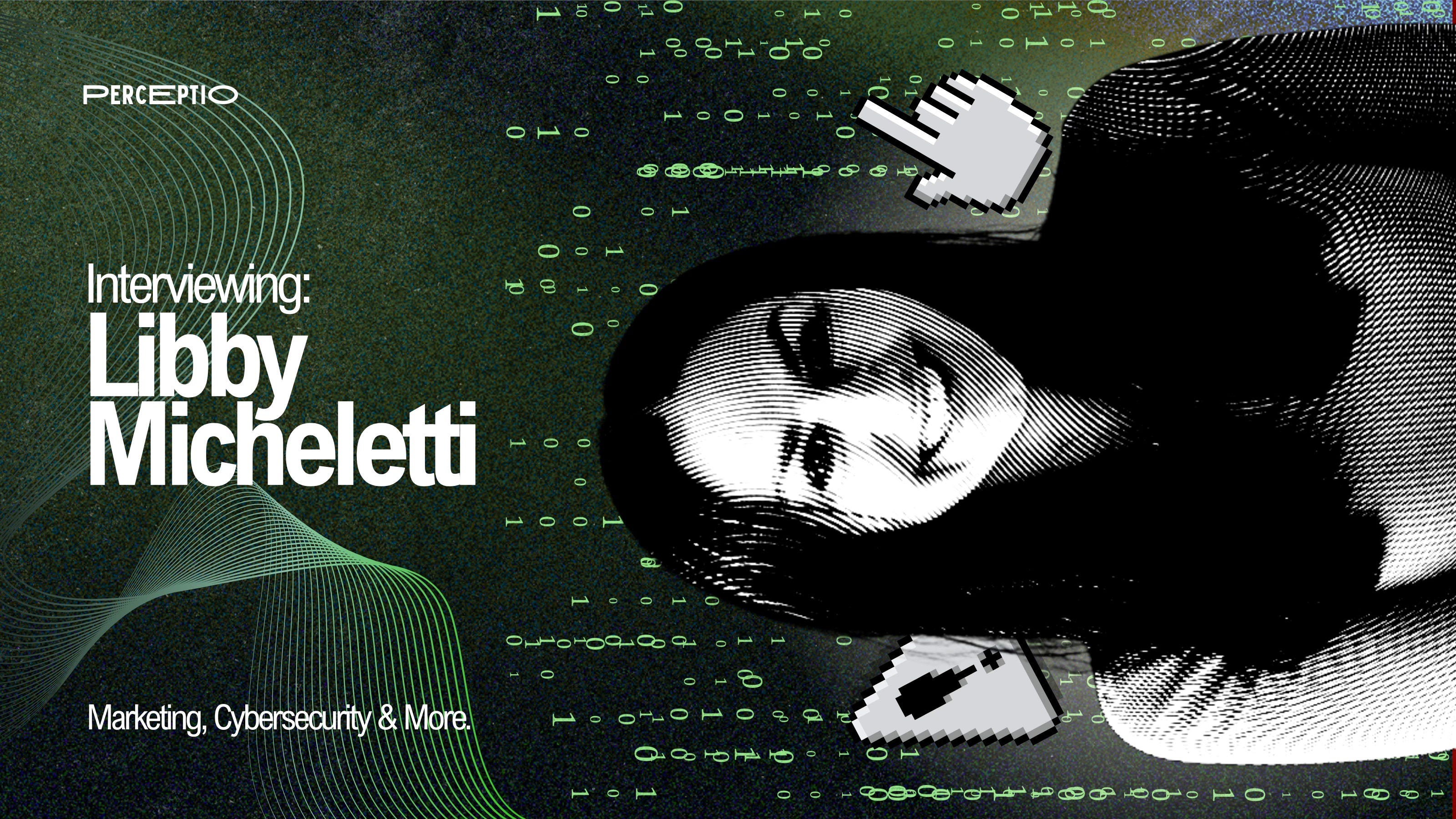
I met Libby through one of the community networks I am part of. Libby Micheletti does not have a linear career. She has something more interesting: a consistent self inside an unpredictable path. Marketer, yoga instructor, career coach, mom. Each chapter is differently than the last. What is interesting is her instinct for when to push, when to let go, and what it actually means to build a network before you need one.
About Libby
Libby Micheletti is an integrated marketing leader at Microsoft Security, based in Seattle. She has built her career at the intersection of marketing and human wellbeing, working across B2B, B2B2C, and B2C for wellness technology (Dyson), career development tools, HR tech, coaching platforms, and enterprise tech (Microsoft, AWS). She is also a certified yoga instructor, a career coach, and a mother to a four-year-old.
Can you tell our readers a bit about you?
Libby: I live in Seattle, originally from Chicago. I'm a marketer and a yoga instructor. I have a BBA and an MBA in marketing from Loyola in Chicago, and I spent the first decade of my career in ad agencies, which gave me a strong foundation: working across different clients, industries, and projects, and seeing the world through that lens. After that, I went in-house, worked with brands like Dyson, led some small teams, and now I'm back in the enterprise space at Microsoft Security leading integrated marketing. The things I'm most passionate about are the integrated marketing lens, product marketing, and being genuinely customer-centric in everything we do.
How would you describe your taste? And do you think other people would describe it same way for you?
Libby: I'm very consistent. Pretty classic, quite minimal. I don't like going too extreme. Clean and simple, chic is always the goal, but there's a little edge in there too. I'll lean a bit rocker, a bit funky, mix it in when it feels right. I don't think that's changed in a very long time. Most people might not use those exact words, but I think they'd agree I'm consistent.
Is that true also about your professional taste?
Libby: I'd say so. I lean on fundamentals, making sure we're nailing the foundation, and then I look at trends strategically. Which ones are right for this moment? Which ones actually make sense for this audience? I don't like the reflex of "everyone's on TikTok, we need a TikTok strategy." If our audience is 60-year-old men, why are we there? Maybe there's a data point that changes that. But the point is to be thoughtful about when to push and when it just doesn't make sense.
What have you been obsessed with lately?
Libby: Cybersecurity. I'm three months into Microsoft Security and I've been fully immersing myself. I listen to a cybersecurity news podcast every morning and I'm genuinely shook by the scope of it. Governments being disrupted, hospitals held hostage, infrastructure under threat. I had no idea of the full picture before stepping into this role. And what struck me is that small businesses are actually among the most affected, because they often don't have dedicated security resources. When I led marketing at a small startup, I was also the head of technology, and no one wants that. The risk is enormous. So please, go look up how to be more secure online. It matters more than most people realize.
What is one common piece of advice in your field that you think is just wrong?
Libby: The idea that you can put heavy marketing polish on technical audiences and have it land. Security professionals, IT folks, technical buyers in general: they don't want marketing fluff. They're skeptical by nature, and in cybersecurity that skepticism runs especially deep. Being direct, transparent, giving them access to real data and real product experience is what actually works. And honestly, that's a broader trend across all of marketing right now. Gen Z included.
Skepticism is everywhere, and authenticity is the only real response to it.
What’s something in culture right now that people are talking about, but for all wrong reasons?
Libby: AI is the obvious one, and I genuinely don’t know what to make of it yet. It’s going to shift things in ways we can’t fully imagine. It’s easy to be scared, but I’m not sure fear is even the useful response right now.
Beyond that, I’m watching two interesting tensions play out simultaneously. One is the return to in-person, to real connection, to experiential things that actually put people in a room together. The other is this contradiction between the attention economy narrative, where everything needs to be short and fast, and the clear appetite for long-form storytelling. People are binging hour-and-a-half television episodes. Those two things are happening at the same time, and I find that really interesting.
What did you believe about work five years ago that you’d argue against now?
Libby: Five years ago I was leading marketing at a small startup, and I genuinely believed marketing could fix almost any problem. Bad results? We just didn’t say it right. Refine the messaging, try again. And for a while that thinking spread through the whole organization. Every problem landed on my desk, and I was ready for it.
But I got to witness the real limits of what marketing can and cannot do. If you don’t have product market fit, there isn’t a whole lot marketing can do for you. That was genuinely hard to accept. It’s given me a much deeper appreciation for market research and customer insight. I’ve always valued those things, but now I will absolutely live and die by them.
Where do you see marketers headed as a professional class?
Libby: I hope we keep moving toward more cross-functional work. The rise of product marketing is a good signal of that. It used to exist mainly in tech and now it's moving into other industries. Product marketing sits at the intersection of product, sales, and customer success, and that central role, being the glue between all of those functions, is where I think the most valuable work happens. I hope we see more of it.
Where do you look for inspiration?
Libby: It cycles. Sometimes I’m deep in LinkedIn thought leadership. Sometimes my TikTok feed goes fully marketing-brained and I love it. And sometimes I just need a complete break from all of it.
I worked at a career and leadership coaching startup, and the single largest group of clients they saw, across every industry, were marketing and communications professionals. More than consultants, more than healthcare workers, more than technologists. Marketers were number one in burnout. Living through that, becoming a yoga instructor, becoming a career coach, all of that taught me to actually pay attention to what I need in a given moment and follow it. If today is not a creative day, it’s an email day. The blog post can wait until tomorrow. Right now I’m not consuming much industry marketing content because I’m deep in learning cybersecurity. I’m letting myself go there. The pendulum will swing back.
As a career coach, what’s the one thing people need to keep in mind right now?
Libby: It is, and everyone says this, but it is entirely who you know. Entirely. Even if you love your job, even if you are not looking, build your network. Maintain it.
Networking doesn't have to be a dirty word.
It's about knowing interesting people, learning from them, offering to help, lifting people up. Those are the things that pay dividends later. You will almost always lose a role to someone who has a personal connection inside that organization. Online applications alone are the lottery. I say this with love to anyone in that job search spiral right now: taking a month off of applications to go meet people, join something, grow as a person, that is not going to hurt your search. It will almost certainly help it.
If someone went through your phone or your search history, what would they conclude about you?
Libby: They’d think this woman has ADHD. All over the place, then hyperfixating on something. And they would be correct. Also: mom stuff. Kids shorts. Appropriate sleep schedules. Why is my daughter waking up at 5 a.m. Absolutely all of that.
Is there a version of your taste that hasn’t made it into your work yet?
Libby: I’m not sure there is, honestly. My career has taken so many unexpected turns that it’s hard to say there’s something I haven’t explored. Working in the mental health and wellness space spoke really deeply to me, and leading marketing for a career coaching startup was genuinely meaningful work. I want to give a shout-out to the women at ALV Coaching because they are building something beautiful. When the time came for me to move on, I didn’t know where I was headed. Ending up back at Microsoft was not something I would have predicted, and it’s been more fulfilling than I expected.
Life is real weird. That’s my takeaway. You have no idea what’s coming. Staying open, letting things go where they need to go: that’s where I’m at right now. I feel lucky for the experiences I’ve had and genuinely excited about whatever comes next.
Check out Libby’s website and LinkedIn.
Hi again, I'm Kima, a strategist writing for people who build brands, careers and art for a living. The algorithm flattened everything into content. This newsletter is about learning to see again.

