

Everything is cringe, all at once and all the time.
Let's climb the cringe mountain together, I guess.


I started this newsletter later than I should have, because what do you mean let people read your writing and be okay with that. I thought about it a lot and came to the conclusion that putting yourself out there is what feels so uneasy about this or any type of “online activity”. I wanted to explore that feeling of cringe a bit here. Read this especially if you want to do something “out of ordinary” for your character.
Art critic John Berger firmly believed that we should study the art of the past to understand how we got here. And then, to think harder about where we might go. We need to look backward, he said, in order to see forward. It is good advice but the question we have is where, exactly, to look now. I know many people compare the current reality we are in with industrial revolution but it is not the same and that comparison, while still valid, is not entirely accurate. So where can we look?
Not at the institutions. They are really busy managing their own decline.
Not at the people who succeeded loudly in the last decade many of them are still winning(and may win for some time), but you can feel something shrinking in their work, you could call it a subtle defensiveness, a compression of the frame and the fame. They succeeded in an era that is ending. They may even know it, even if they haven’t said it out loud. They represent a warning sign to us all. The old system is gone, the new is not born yet, we are in the uncomfortable space right now. It is time for us to say out loud that our lives and careers are going to be \significantly\ different from previous two generations. To get to the possible futures, we have do to many things and they will feel… cringe at times.
That is the tactic, maybe the only one available now.
Everything could be labeled cringe, everything the newsletter, the pivot, the business idea on shaking ground…. There is no UNembarrassing thing available if we are being honest with each other.
Cringe is not a taste response anymore. It is what a dying consensus does to protect itself from the people who can already see past it.
This is the thing most cultural commentary gets wrong about cringe. It focuses on the behavior being labeled, not on the function the labeling serves. The person typing cringe in the comments is not always expressing distaste. They are drawing a boundary around something the current order cannot accommodate. They are enforcing (sometimes even shaming) on behalf of a system that no longer fully works, the cost of deviating from it.
The cost used to be real. When the consensus was working, when the safe path actually led somewhere safe, cringe did kind of legitimate regulatory work. You could just stay on the road. You should have not let your ambition show before you can back it up. You could have built credentials and experience. Overall, you could have waited until you were ready. This worked, for a while, inside systems that rewarded patience and compliance.
This is what reading that career advice feels like in 2026. The map is gone but people are still trying to sell you their career advice from 2018.


This was genuinely good advice, once, inside systems that rewarded the accumulation of credentials and the careful management of risk. It is now the sound of someone describing a game that has changed its rules.
The cringe enforcement often comes from here. From people who have something real to lose if the old logic stops existing. You can feel the difference between someone who calls your idea too much, too out there, too evident because they have thought carefully about it, and someone who calls it too much because your willingness to begin is a small reproach to their decision to stop.
Simone Weil, one of the most prominent thinkers of the last century, wrote that the greatest human need is to be rooted: in a community, in a place, in a shared past and in collective future hopes.
For that, we need collective imagination, for a group of people to look at the present together and say: here is what we are building toward. Here is the future we are orienting around.
We do not have this figured out right now. What we have instead is a lot of people separately trying to understand the new rules while performing artificial certainty they do not feel. The cringe response is what fills the empty space where collective future hopes and inspirations used to live. It keeps the real question from being honestly asked: what are we actually building toward, together?
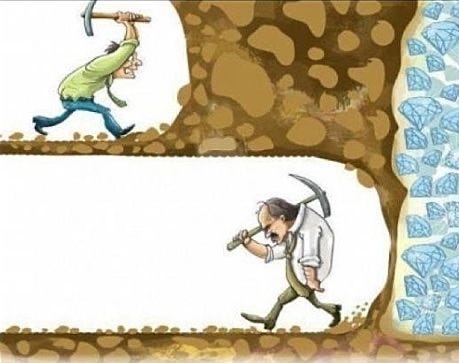
This is where the idea of collective imagination could be very helpful for us all. You can your way back to imagination through other people and their experiences. You meet someone 3-4 years into building something that looks like chaos from the outside and like the first true thing they have ever done from the inside. You read something at 1am that names exactly what you had been feeling but had no words for. You watch someone do the cringe thing (post it, start it, say it, mean it, I don’t even cover the re-startings, re-doings and so on) and survive it, and something loosens in you that you hadn’t noticed was tight.
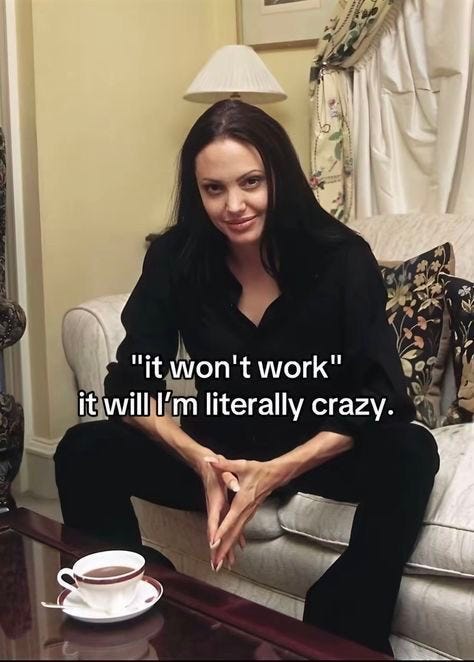
This is what looking at the right work does. It won’t give you a strategy for your casee but it could give you an evidence. Evidence that the attempt is survivable. That building before the ground stabilizes is not recklessness, it is the only available option if you want to build anything at all. News flash: you will make many-many mistakes in the process. You should find a way to be okay with that.
These people are not the ones with the most polished answers. They are the ones already living inside the question. Already constructing, badly and publicly, some early version of the collective future that has not been ratified yet. You hear them and something in you changes. You understand, suddenly, that the cringe response was never really about them. It was about the size of the life you were allowing yourself to imagine.
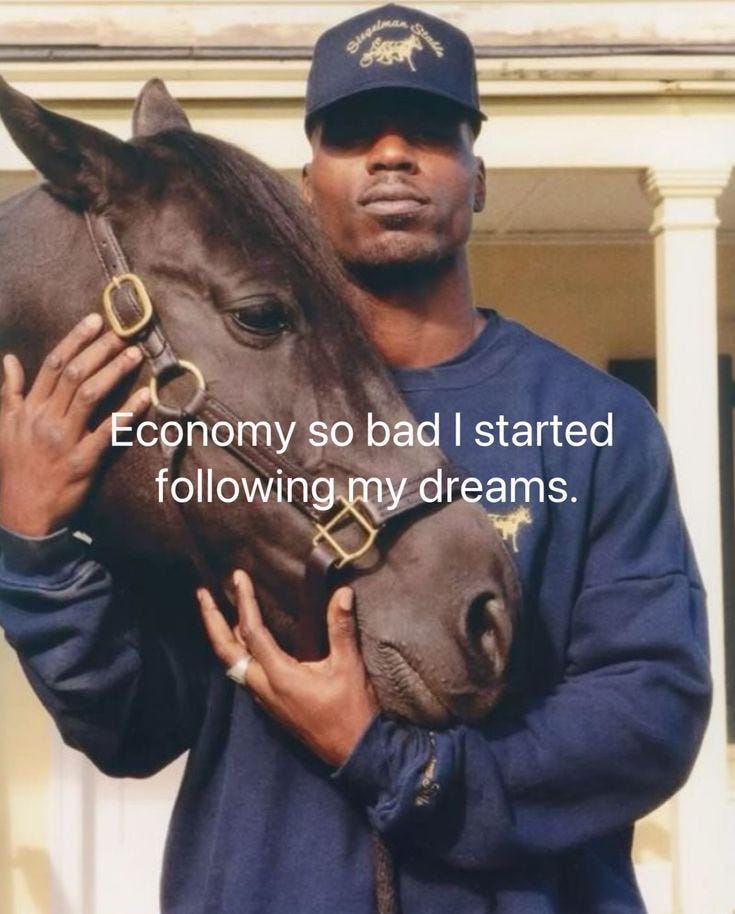
This is what cringe is protecting us from. From imagining, out loud, together, a future that does not yet have institutional approval. From beginning before we are certain it will work. From being seen, in public, hoping.
Weil’s rooting requires collective future hopes. You cannot build them while performing cool detachment. You cannot build them while the cringe response is still running as the default, flagging every sincere attempt as evidence of poor judgment.
The era that’s ending demanded compliance. The one being born does not know yet what it demands. That gap is uncomfortable but it is also (if you are paying attention), the most honest place to be. Let the cringe go. Yes, it does cost something. But the alternative is organizing your one and only life around the preferences of a consensus that is already over. You don’t need a map. You need people who are also, right now, trying to draw one. Find them or be one.
Some sources referenced above:
The Need For Roots by Simone Weil
Permanent Red by John Berger
Random memes from Internet
About Kima
Kima Sargsyan is a strategist and narrative consultant writing Perceptio. She works with founders and execs on how their company is seen and how to shape it.
Want to keep talking?


this was much needed read for me as I am changing my specialization and need to put myself out there more often. it does indeed feel cringe lol