

February: On ambition and starting again
Imagine forward.


January 2026 started so heavy in so many places across the globe. I was actually debating whether to post this today. Do people need my thoughts right now? What would help? Should I just go inward and only write when everything feels ok? I know “everything will be ok” isn’t something we all arrive at the same time. But February just started, and I wanted to invite us to start again. To show up for ourselves and others. To hope and to create in the most radical and resilient way possible.
So today, the thoughts are different.
On ambition
There’s this pseudo-intellectual way of talking about ambition, vision and intention. Everything sounds figured out. But that’s not how it works.
Ambition is a dance between two things that seem opposed but aren’t: the seriousness that gets you to show up for your practice consistently and the joy that makes it sustainable. You need both. Without seriousness, you’re just playing and without joy, you burn out. The real work happens in the friction between them.
I’ve realized also that you can’t sustain ambition alone. Sometimes you need inspiration in the wild. Sometimes you need proof that another way of thinking exists, another way of making exists, another way of holding yourself accountable exists. That’s where reference points come in.
Sometimes you need to see something to know you can pursue it. You need to watch how someone else holds seriousness and joy at the same time. You need proof that there are other ways. They’re breadcrumbs. Ways of thinking that remind me what’s possible when you commit to something deeply enough. When you hold seriousness and joy at the same time. When you refuse to simplify.
Reference points are about inspiration. They don’t have to be from your field at all. Like mines are not. Here are some that are alive for me right now.
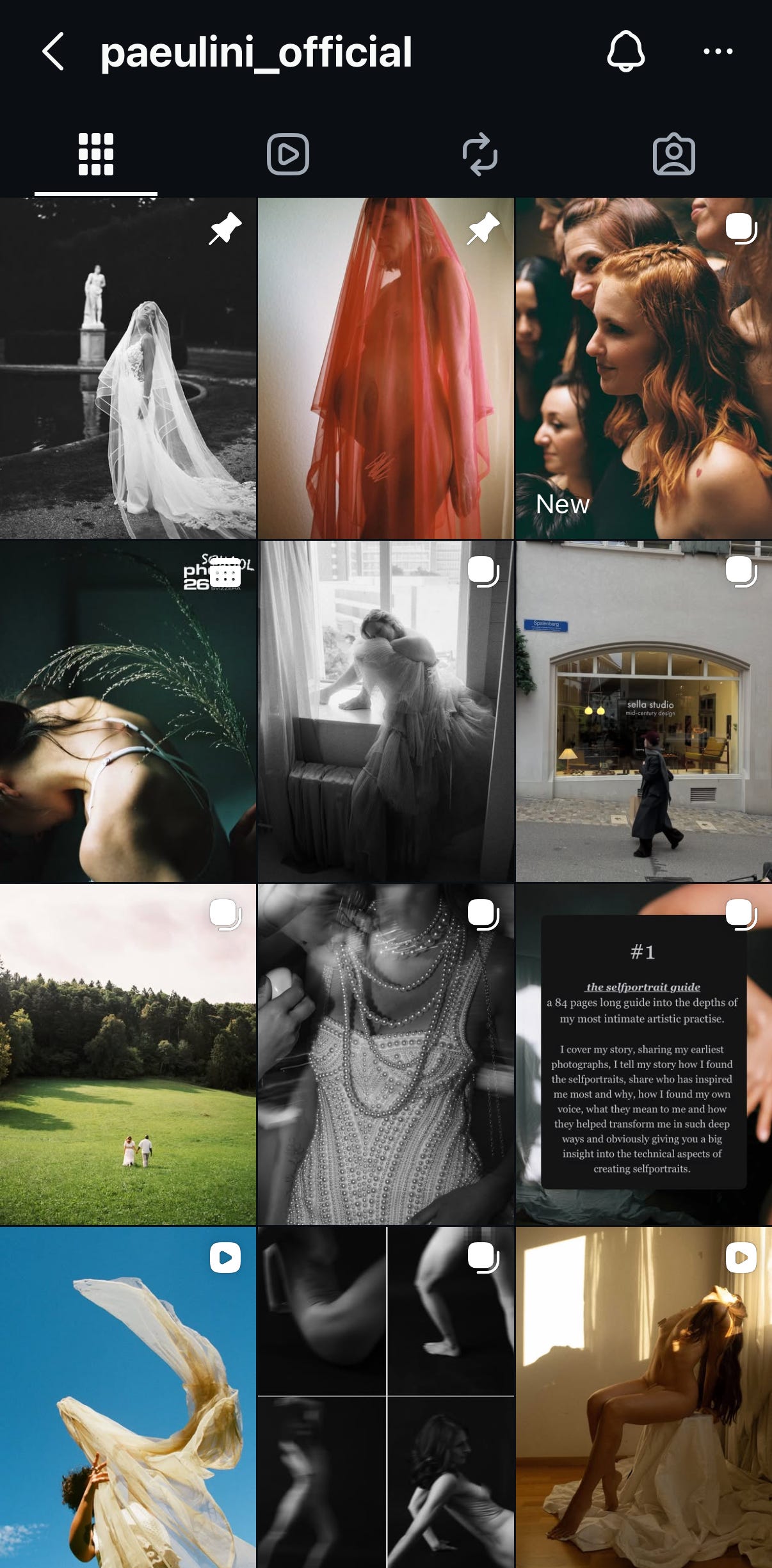
1. Paeulini — The intimacy of repetition
Focus as ambition
Chantal photographs herself, her partner, friends. Her style of film photography is unique and sensorial. This intimacy of repetition is often achieved through a consistent, almost diary-like repetition of capturing everyday, intimate moments, such as the human body, domestic scenes, and personal relationships. That consistency, that refusal to constantly find new subjects, teaches you something about patience. About faith in the idea that staying with something, really staying with it, reveals things that moving on never will.
2. Career Archetypes — Meaningful vocations
Meaning as ambition
Joel’s work is about “helping the spiritually and creatively inclined pursue meaningful vocations.” That phrase alone meaningful vocation lands differently. It’s a reference point that says: work is so much more than salary or title. It’s not even just about visibility. It’s about whether it means something to you. Whether it’s aligned with something real. That reframing changes everything about how you think about ambition.
3. The Charisse Report — Being both inside and outside
Duality as ambition
Charisse lives in two worlds simultaneously. She’s embedded in beauty industry culture and also critically analyzing it. She’s inside and outside at the same time. That dual position teaches something crucial: you don’t have to choose between commitment to your field and honesty about what your field is doing to culture. You can hold both. It’s harder than picking a side but it’s the only way that actually feels true.
4. Jana Sojka — The universe inside one color
Depth as ambition
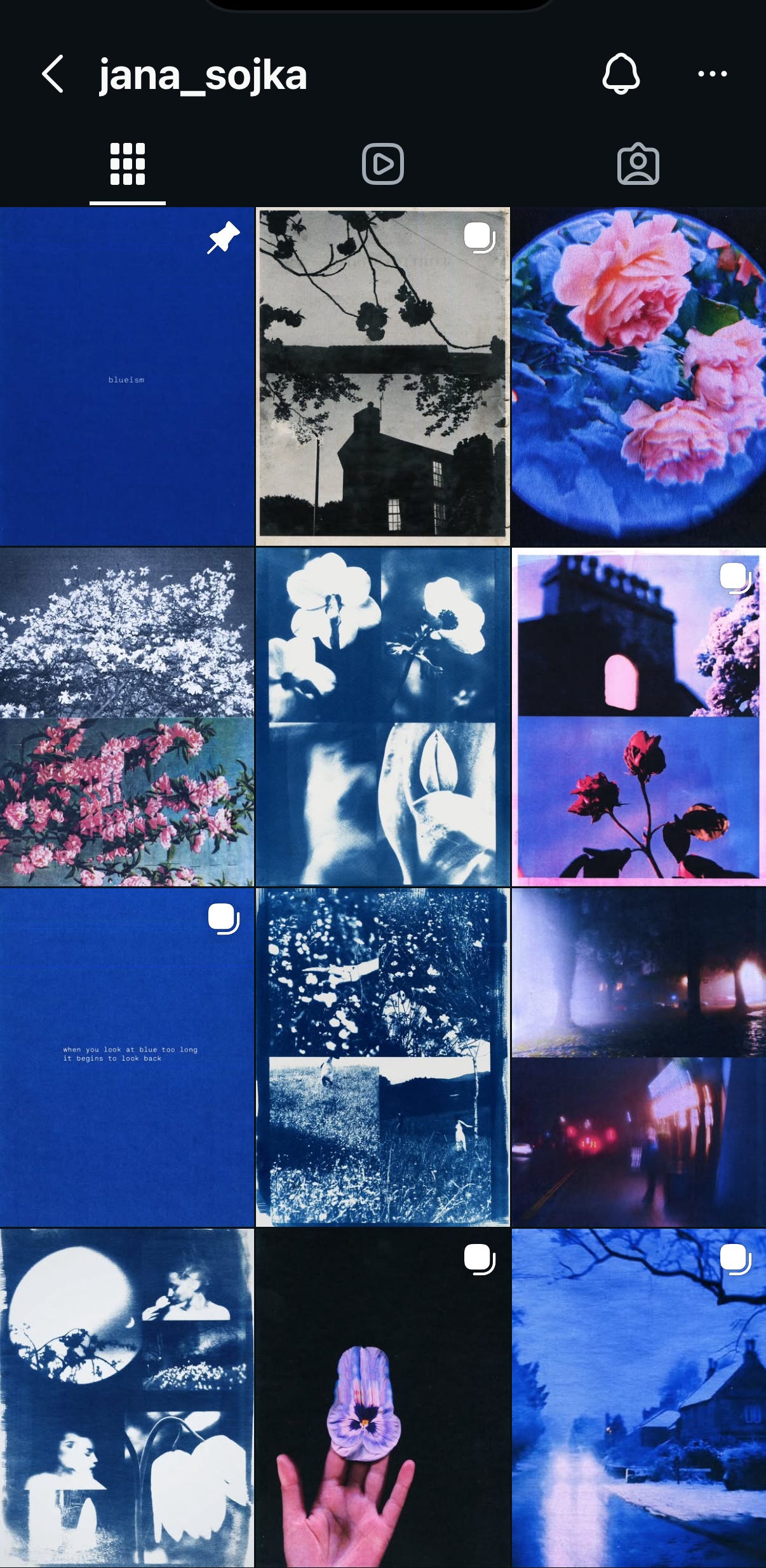
Jana returns to blue obsessively. Blue as in the color, the feeling, the experience of it is infinite if you look long enough. The repetition is meditative. She’s showing what deep focus actually looks like. Ambition doesn’t always mean expansion. Sometimes it means excavation. Sometimes it means going deeper into what you already love.
Jana’s posts on IG make me stop and reflect every time I see them:
“blue is a letter
that no one sent
yet everyone recognises
the handwriting

it is read with the skin
read with silence
read at night
when words are too heavy"
5. The School of Critical Design — Design as Ethics
Responsibility as ambition
Critical Design isn’t asking what something looks like. It’s asking what design is for. Their design principles aren’t about aesthetics, they’re also about asking hard questions before you make anything. This is ambition as responsibility. It’s harder to work this way. But it’s the only way that feels honest now. It makes you slow down and think about what you’re actually adding to the world.
Even “small” notes like the one below show intention:
6. Lucy Cotter — Reclaiming Artistic Research
Knowledge as ambition
Lucy wrote a book that’s basically a conversation with 24 artists about what research actually means when artists do it. Not academic research. Not market research. Artistic research. The second edition features a new essay, “Artistic Research in a World on Fire,” that explores how art creates knowledge differently through material, embodied, spatial ways of knowing. It’s essential for anyone doing any kind of research. It reclaims the term from academia and puts it back where it belongs: in the hands of artists and makers asking their own questions. I’m recommending the expanded second edition from 2024.
What I’m looking forward to
There’s one more thing I wanted to name here. I’ve been thinking about the ecosystems we build around our work, about collaboration, about commissioning illustrations for a Substack that doesn’t exist yet. About the idea that if you keep building something thoughtfully, the people and resources show up. Isn’t this the real ambition?
I want to do that with Perceptio. Commission design work. Create conversations between different kinds of minds. Make it a place where thinking doesn’t happen alone. That’s the ambition I’m holding for this year.
So this is an invitation: What’s in your pocket right now? What is cracking you open? What people or practices are teaching you something about how to move forward?
With love,
K
About Kima
Kima Sargsyan is a strategist and narrative consultant writing Perceptio. She works with founders and execs on how their company is seen and how to shape it.
Want to keep talking?