

Career shapeshifting in the AI era
Shape your skills, shape your future.

You may have watched the famous David Bowie interview from 1999, where he talks about the Internet and makes some exciting predictions, mentioning that the "Internet is the new rock and roll." What is fascinating about this interview is how accurate he was with the impact that the Internet would have on humanity. Here is a snippet from his thoughts that I got caught in the past few weeks:
"The potential of what the Internet will do to society, both good and bad, is unimaginable. -- It's an alien life form. The actual context and the state of content are going to be so different to anything we can really envisage at the moment where the interplay between the user and the provider would be so in simpatico it's going to crush our ideas of what mediums are all about, but it's happening in every form, it is happening in visual arts. The breakthroughs at the early part of the century like Duchamp who was so prescient in what they were doing and putting down, the idea that a piece of work is not finished until the audience come to it and add their own interpretation and what the piece of art is about, it is the gray space in the middle. That gray space in the middle is what the 21st century is going to be about..." - David Bowie
Is this the truth about AI, too? We are indeed undergoing a significant change that we can't fully grasp yet. However, this change also brings with it a wealth of opportunities for growth and learning, particularly in our careers.
It is no secret that the current job market is in total distress. My guess is that future jobs and careers will look different from today's public perceptions. AI will disrupt our careers no matter which field we are in.
I don't want to make predictions that are unfounded, but I do want to stress the importance of staying curious, to keep learning, and to continue showing up with an open mind and a willingness to adapt.
Stay curious
Curiosity in this context means holding space for what is dying and what hasn't been born yet.
Everything is constantly moving and shifting, and so are you. You don't have to make major decisions right now or start a significant life redesign project just because things around you are changing. If you still can't determine where the changes will lead you, you can wait, hold space, plan, and prepare.
In the current situation, the adaptation I think about is building a flexible career path. Think about learning and expanding into new spaces, industries and topics.
Where to start
Core skills
Identify your core skills. What are you really good at? What can you do well in multiple settings? These are your building blocks for any role. I don't only mean your hard skills like social media strategy or product management, but the patterns you have noticed in yourself or perhaps for which you were praised. It could be that you have been a great negotiator or been brave enough to suggest solutions where others practice groupthink.
Your current skills are valuable and will continue to be so in the future.
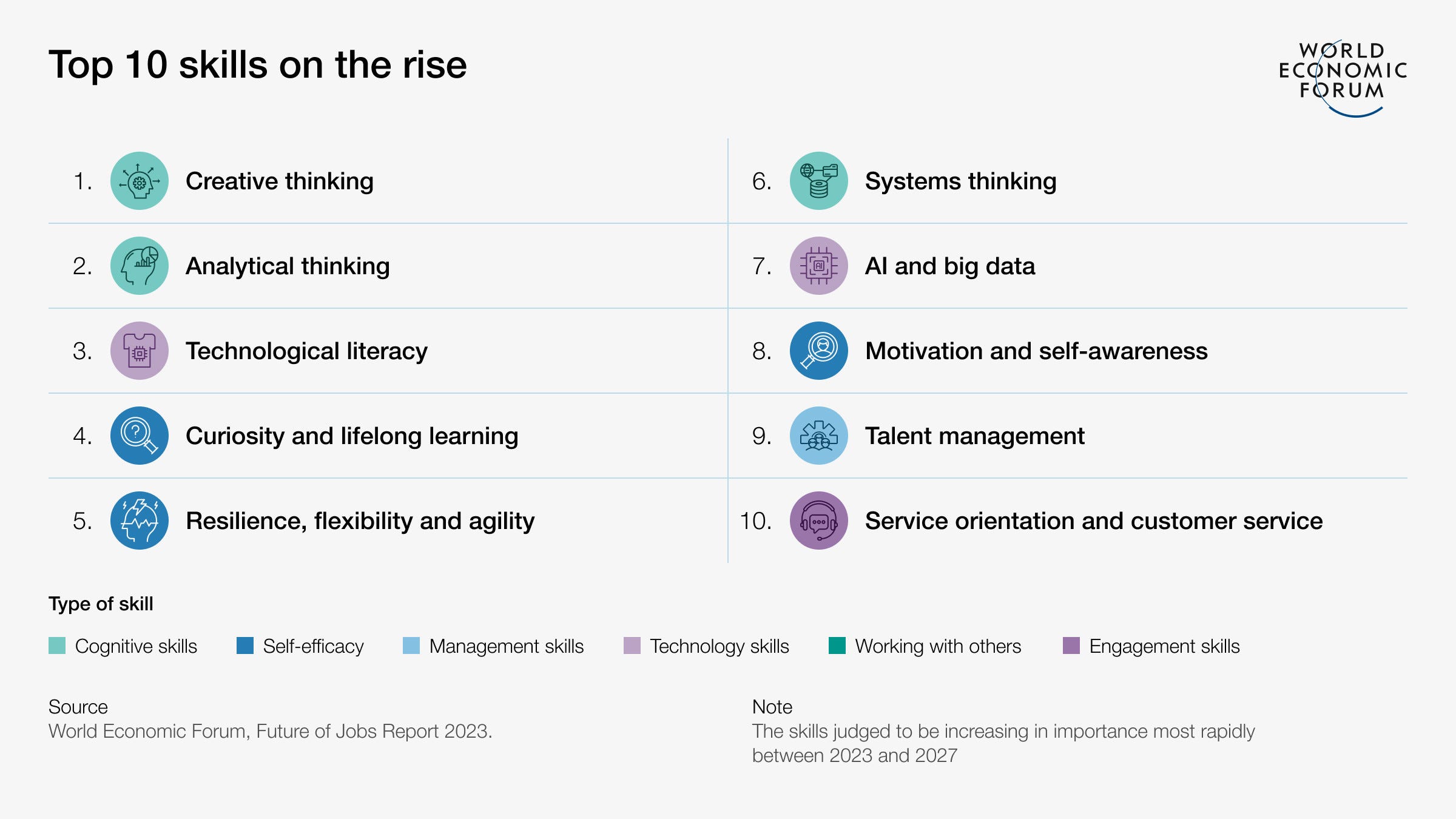
Review your latest performance reviews or take assessment tests to determine your core skills list. The World Economic Forum the future of job report (2023) highlights a 44% of workers’ core skills are expected to change in the next five years. Here is a snippet on top ten skills on the rise:
Working style
Discover your working style. I love the DISC assessment framework you could use to understand your working style. The DISC personality model describes four types: D for Drive, I for Influence, S for Support, and C for Clarity. Each type represents a particular approach to completing work and contributing to a team.
Drive: taking charge and making critical decisions
Influence: engaging others to work together
Support: assisting others to achieve group goals
Clarity: working independently to produce correct results
Each of the four DISC personality types is equally valuable and has its own strengths and weaknesses. Discovering your own type can help you better understand how to bring your strongest talents to your work while minimizing your blind spots.
Learning
Expand. Learn new skills. Could your current profession be absorbed by other professions or redefined? Or you may have been thinking of putting some time into going deep into expertise and making yourself a bit more of a t-shaped specialist. This may be the best time to hone these skills if any of these resonate.
Research new industries: Explore sectors that interest you and see how your skills align.
Continuous learning: Stay updated on industry trends and acquire new skills.
Network
I know it is exhausting. However, I want to promote a different type of network. For me, networking is meeting people naturally through work, courses, and projects where you can talk about more than the weather. Building relationships is critical. It could also be reconnecting with an ex-colleague in the same city. Find ways to make people remember you. You can never guess where these interactions may lead you. You could get some information on their current companies or get inspiration on what they are building or pursuing.
A flexible career isn't about jumping ship constantly. It's about being prepared for change and seeing opportunities where others see roadblocks.
Bonus: Recommended reading
The Future Does Not Fit In The Containers Of The Past newsletter, particularly - "company of one mindset" series.
From Still careering archive:
You can check out the piece on cultivating your signature strengths.
You may be curious about one of my most popular pieces: Slow to anger and slow to judge.
As the world is constantly changing, I am trying to challenge my own perspectives. Here is a piece where I tried to see and approach career as a story.
I am also active on LinkedIn. Reach out, let’s chat.